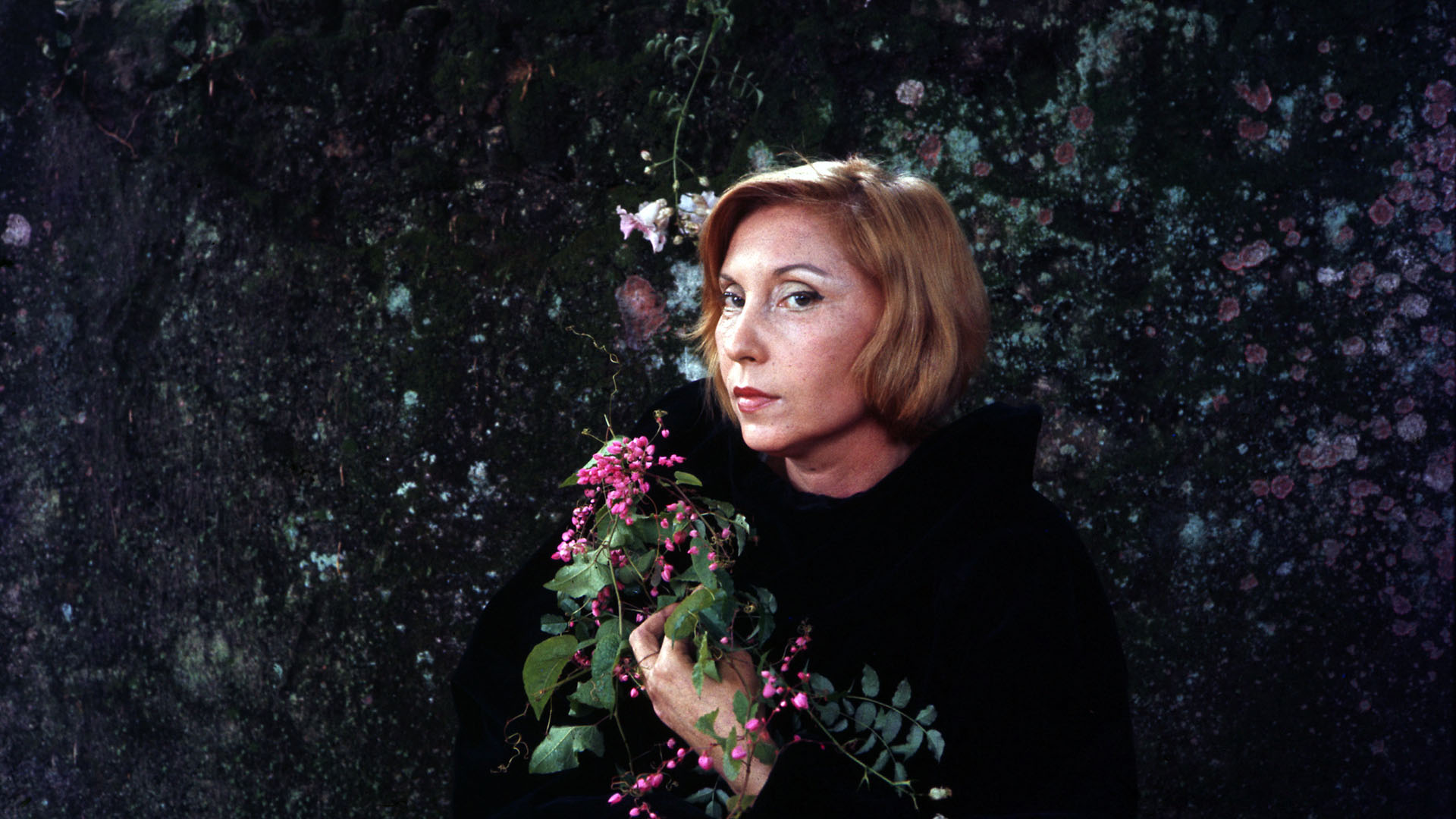
, After Clarice. IMS Clarice Lispector, 2017. Disponível em: https://site.claricelispector.ims.com.br/en/2017/11/16/after-clarice/. Acesso em: 30 March 2026.
While the cariocas, residents of Rio de Janeiro, prepare for the long holiday weekend in honor of Black Consciousness Day, St. Peter’s College, at the University of Oxford in England, is promoting a turbo-charged schedule for November 17-18 in honor of Clarice Lispector, to celebrate the 40th anniversary of her death.
Organized by Professor Claire Williams, the conference After Clarice: Lispector’s Legacy will gather the greatest experts of the work of the author of The Passion According to G.H. to discuss a wide range of topics.
By counting on academics who translated Clarice’s works, the conference aims to shed light on the different perspectives of translators into various languages, a topic that will lead to much debate.
Artists who have interpreted Clarice, personage or work, will not be left out. Gathering professors from Berlin to Beijing, including scholars from the University of Minho and the University of Ceará, and, of course, counting on several in-house professors, After Clarice will also hear specialists with respect to the editorial policies around the work of the honored author– not losing sight also of Clarice Lispector, the newspaper chronicler, who wrote to earn a living.
“To write is to shine,” Otto Lara Resende affirmed in the profile he created of the writer. Yes, Clarice will indeed shine in the English autumn at Oxford.
Those interested can see the schedule on the site https://afterclarice.wordpress.com/
See also
 by Equipe IMS
The Brazil LAB is an interdisciplinary initiative at Princeton University that considers Brazil to be a crucial nexus for us to understand today’s most pressing issues. Based at PIIRS (Princeton Institute of International and Regional Studies), the LAB brings together professors, researchers, and students from more than 20 different university departments (from the social to the natural sciences, from engineering to the arts and humanities) in interaction with dozens of researchers from academic institutions of excellence.
 by Equipe IMS
Acclaimed by critics and a popular phenomenon on the internet, Clarice Lispector is considered, internationally, one of the great names in 20th century literature. Mysterious, obscure, revealing, experimental, strangely mystical, or philosophical – how to define the writing of the author of The Hour of the Star? This podcast, conceived and presented by Bruno Cosentino and Eucanaã Ferraz, covers Clarice’s life and work in five episodes, in which they talk to great specialists, professors, and researchers.
 by Bruno Cosentino
The writer Ana Maria Machado had an unusual and emotional episode with Clarice Lispector. This happened in 1975. After having read an article by Ana Maria, published that very day in the Jornal do Brasil, about the birthday of the writer Roland Barthes, Clarice, who did not know her personally, insistently asked her for help to organize what in two years would be the book The Hour of the Star.
 by Eliane Robert Moraes
Darkness is a hollow word and one never really knows what fits inside Its dimensions are so undetermined that perhaps it could even be said that everything fits and nothing fits in it, since, being an immense storehouse of paradoxes, the ambiguous quality of immeasurable is immediately added to the primordial void that characterizes it. These attributes, thus agreed, gain particular density when prepared by the wrought of the author of The Apple in the Dark.
 by Paulo Gurgel Valente
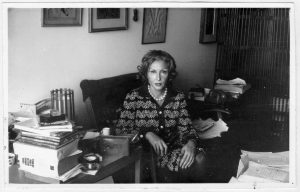
I believe that Clarice and I shared a common feeling: objects are not inanimate, on the contrary, they have a secret life. I do not know if the reader has already tried turning off the lights at night in your room and, little by little, noticed that your eyes adapt to the dark and finally you can perceive the living presence of things.
 by Elizama Almeida
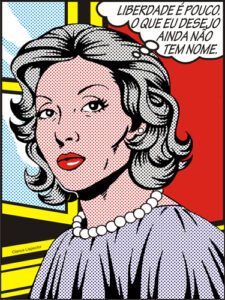
According to a survey done by YouPIX in June 2012, Clarice is the most quoted writer on Twitter. Every day more than 3.5 thousand phrases by the author – or attributed to her – are posted on there.