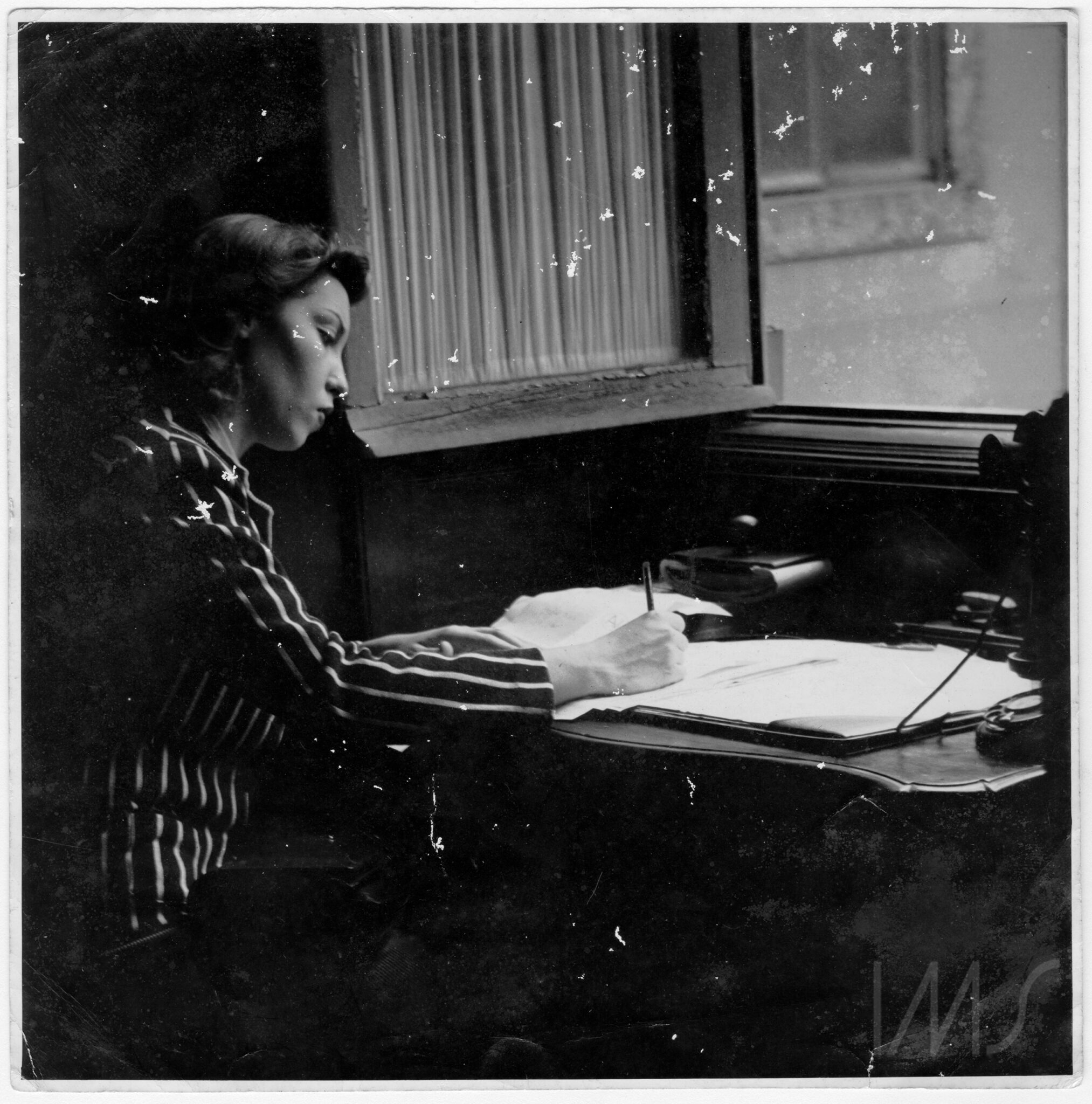
, Clarice Lispector at the Buenos Aires Book Fair. IMS Clarice Lispector, 2018. Disponível em: https://site.claricelispector.ims.com.br/en/2018/04/19/clarice-lispector-na-feira-do-livro-de-buenos-aires/. Acesso em: 07 April 2026.
Clarice Lispector will be honored at the Brazil booth at the 44th Buenos Aires International Book Fair, which will take place between April 24 and May 14.
The project entails a multi-language exhibition about the Brazilian writer composed of a large poster board with her image, biography, and fragments of her work; books for sale in Portuguese and Spanish editions; video projections with interviews about her; and a replica of her statue, the original of which is located at Leme Beach, in Rio de Janeiro, where visitors can take photos.
On May 5, a day dedicated to Brazil, the booth will also hold a reading of dialogues by the author, read by five Argentinian actors, followed by a performance of her texts by the actress Luísa Kuliok in an auditorium for up to a thousand people.
*Photo: Unknown photographer/ Clarice Lispector Archive/ IMS
See also
 by Elizama Almeida
It’s the end of 1943. A publishing house of little cultural relevance, A Noite, releases the exceptional Near to the Wild Heart, a book by a 22-year-old author and former employee of the publisher.
 by Bruno Cosentino
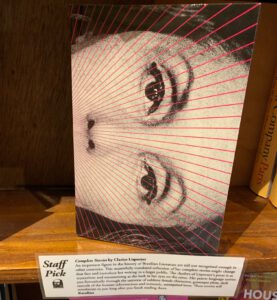
The traditional Parisian bookstore Shakespeare and Company placed on special display the English version of the book The Complete Stories, by Clarice Lispector.
 by Elizama Almeida
A conversation about football and literature between Armando Nogueira and Clarice Lispector
 by Bruno Cosentino
This August, Todas as crônicas will be released, a volume that brings together for the first time all the chronicles written by Clarice Lispector for newspapers and magazines.
 by Cicero Cunha Bezerra
Michel de Certeau, in his La fable mystique, addresses an important aspect in the relation between idiocy and holiness in the first centuries, particularly in Christian literature, namely: a mode of isolation in the crowd. Idiocy, in the form of madness, is attributed to the crowd, and additionally, is established as a provocation, a transgression in the field of the “right-minded.”
 by Rubem Braga
It would be possible to say that Clarice Lispector’s finesse recalls that of Virginia Woolf – which actually seems to be her strongest influence. But what most surprises and captivates me in Clarice’s short stories...