IMS, Equipe. Clarice Lispector’s New Website Receives an Award. IMS Clarice Lispector, 2022. Disponível em: https://site.claricelispector.ims.com.br/en/2022/01/13/clarice-lispectors-new-website-is-awarded/. Acesso em: 17 March 2026.
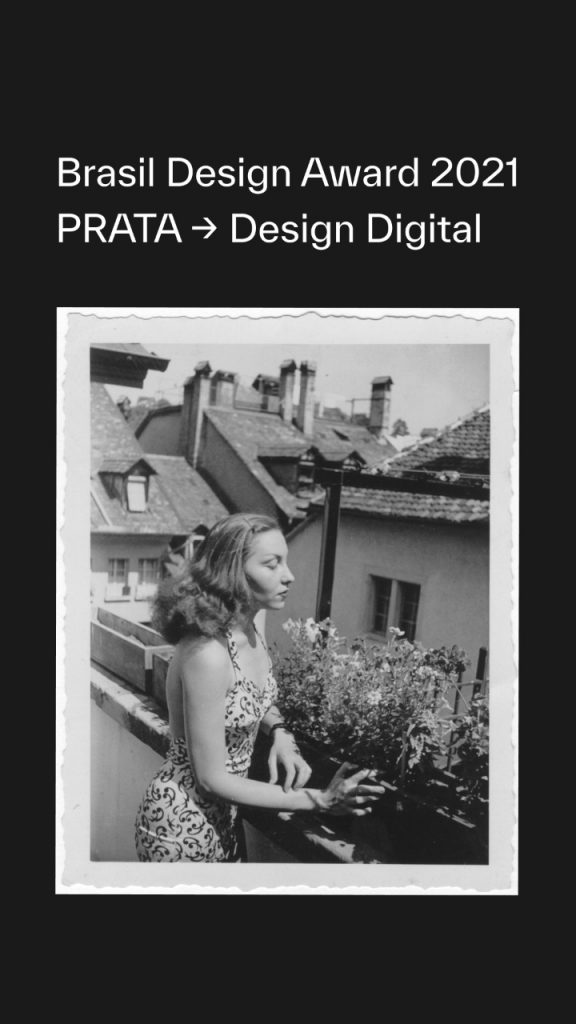
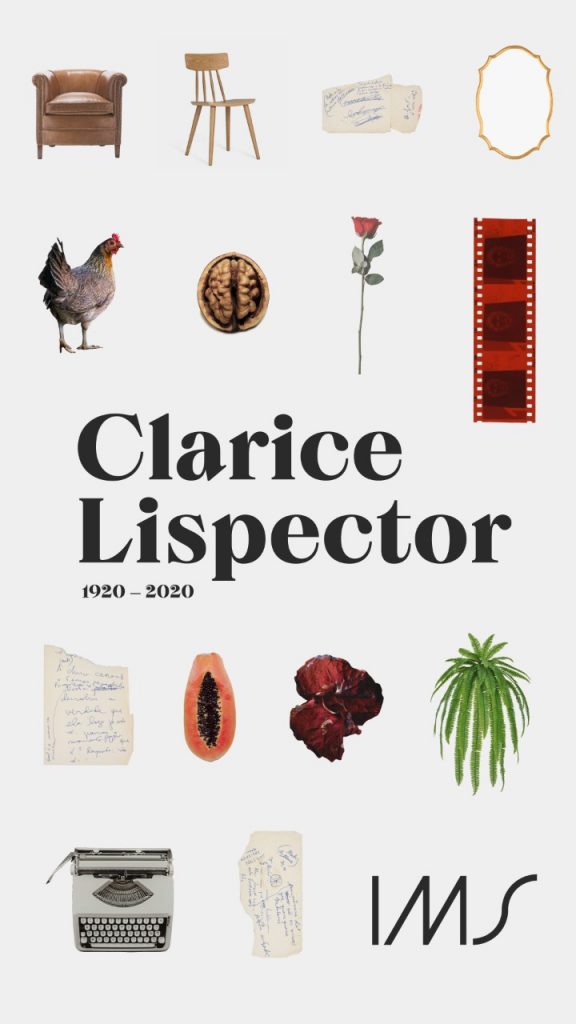
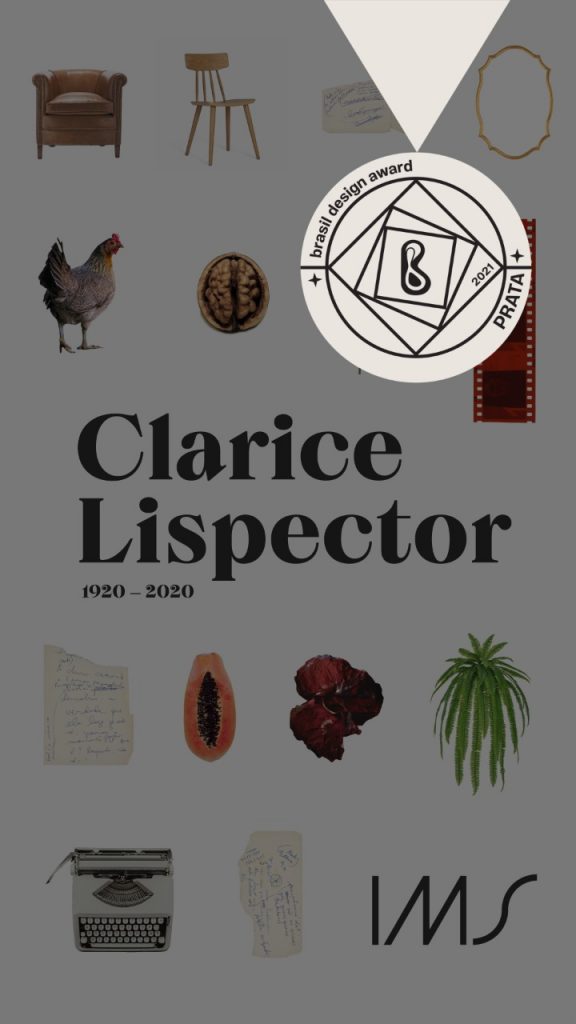
Last December, Clarice Lispector’s new website, launched on the author’s centenary, on December 10, 2020, earned second place in the Best Digital Design category of the Brasil Design Award.
The award has been given since 2009 and is organized by the Brazilian Association of Design Companies with the aim of recognizing and highlighting the creative and innovative capacity of Brazilian design. It is currently the biggest national design award, in which the main creative companies of the country participate.
Clarice Lispector’s official website was developed by Estúdio Cru in partnership with the Literature Coordinator of the Moreira Salles Institute (IMS), which holds an important part of the writer’s collection. The agency’s directors, Bernardo Winitskowski and Maria Alice Leal, explain the proposal:
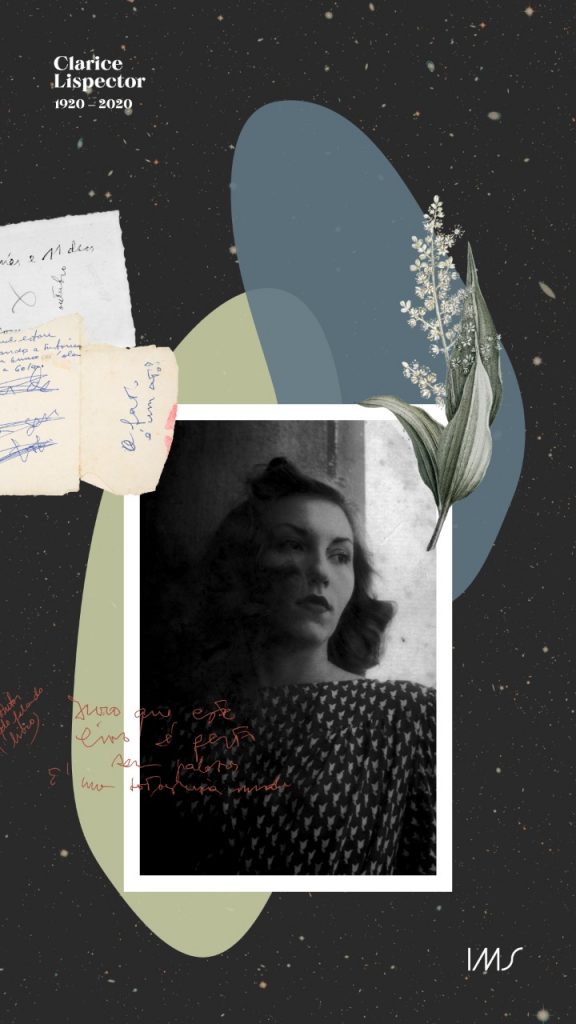
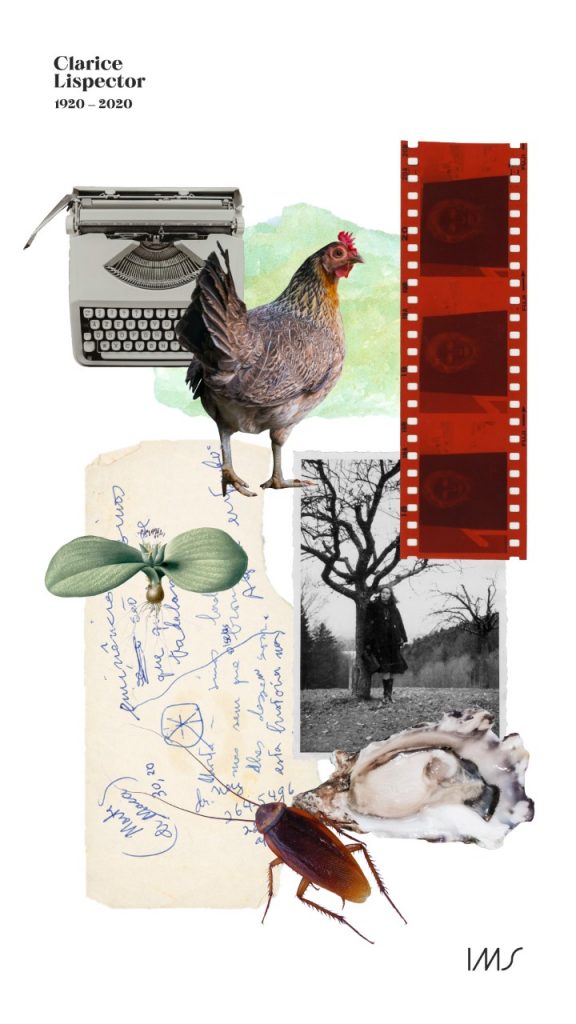
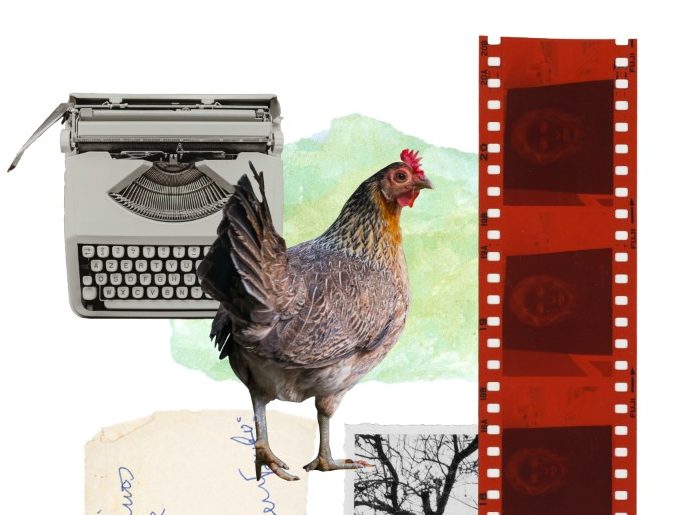
“The idea was to create an immersive experience that conveyed the principles of the author’s work: visceral, poetic, and labyrinthine. This experience, which we call a narrative, is a non-linear way of navigating the timeline. The starting point was a process of profound research and investigation. Together with the IMS literature team, we developed a narrative, selecting the main visual and thematic elements that would be capable of creating the desired effect on the user.”
The Estúdio Cru team that participated in the creation of Clarice Lispector’s new website was composed of designers Felipe Barbosa and Fernanda Morgan, developers Pedro Rivera and Raincake (led by Heric Reis and Letícia Yokoi), producers Maria Alice Leal and Alexandre Caetano, and project manager Gérome Ibri. The curatorship, research, and content were under the responsibility of Eucanaã Ferraz, Bruno Cosentino, and Elizama Almeida, from the Moreira Salles Institute.
The professor and writer Evando Nascimento gave a class on the work of Clarice Lispector at the IMS Rio. His talk is based on the category of “thinking literature.”
Acclaimed by critics and a popular phenomenon on the internet, Clarice Lispector is considered, internationally, one of the great names in 20th century literature. Mysterious, obscure, revealing, experimental, strangely mystical, or philosophical – how to define the writing of the author of The Hour of the Star? This podcast, conceived and presented by Bruno Cosentino and Eucanaã Ferraz, covers Clarice’s life and work in five episodes, in which they talk to great specialists, professors, and researchers.
Every year the University of Tennessee prepares AuthorFest, a series of activities to celebrate the work of a single author. In its second edition, AuthorFest paid tribute to Clarice Lispector.
I died. I found out when, one day, on the sidewalk of Praça Maciel Pinheiro, I lifted my head, opened my eyes, and saw myself dead, there on the plaza’s sidewalk, the two-story house on the other side of the street. My broken heart inside my chest, the two-story house on Rua do Aragão, 387, where, on the second floor, Clarice Lispector lived a happy childhood here in Recife, despite the pains of the world and experiencing and feeling, mainly, the pains of an implacable disease that would one day take Mania, her mother, away from her. I found out when, laid out on the sidewalk there under the scorching Sunday sun, I turned my head to the right and saw a man beside me, who was also looking at the house.
I spent an unforgettable weekend in Cabo Frio, hosted by Scliar who painted two portraits of me. Scliar’s house is very beautiful. Cabo Frio inspires Scliar. I asked him about so much creativity.
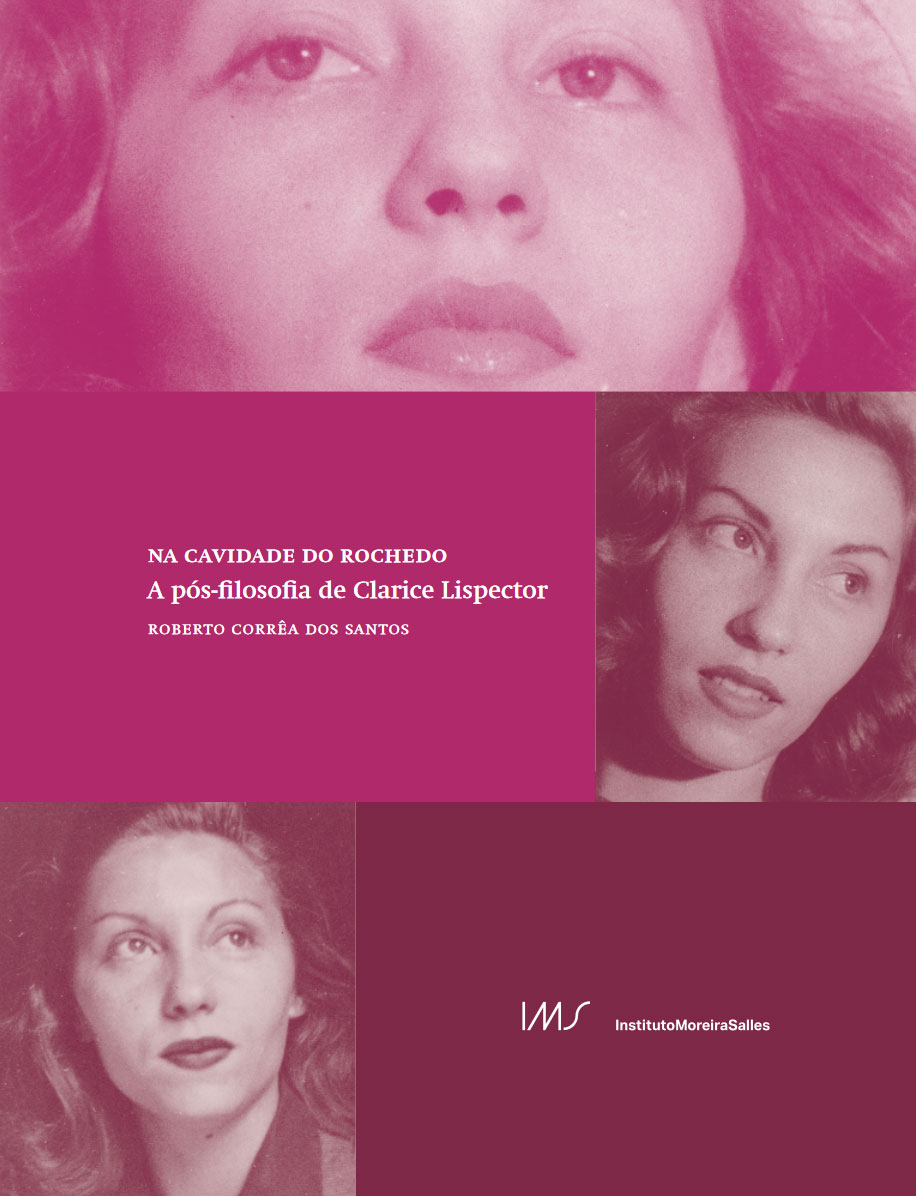
The work of Clarice Lispector revolves around on two notions: the symbol and the thing. The thing, physics, and the symbol, metaphysics; the thing, immanence, and the symbol, transcendence; the thing, the body, and the symbol, language; the thing, existence, and the symbol, the saying; the thing, the event, and the symbol, the way to make it possible to read the nonsymbolizable thing.