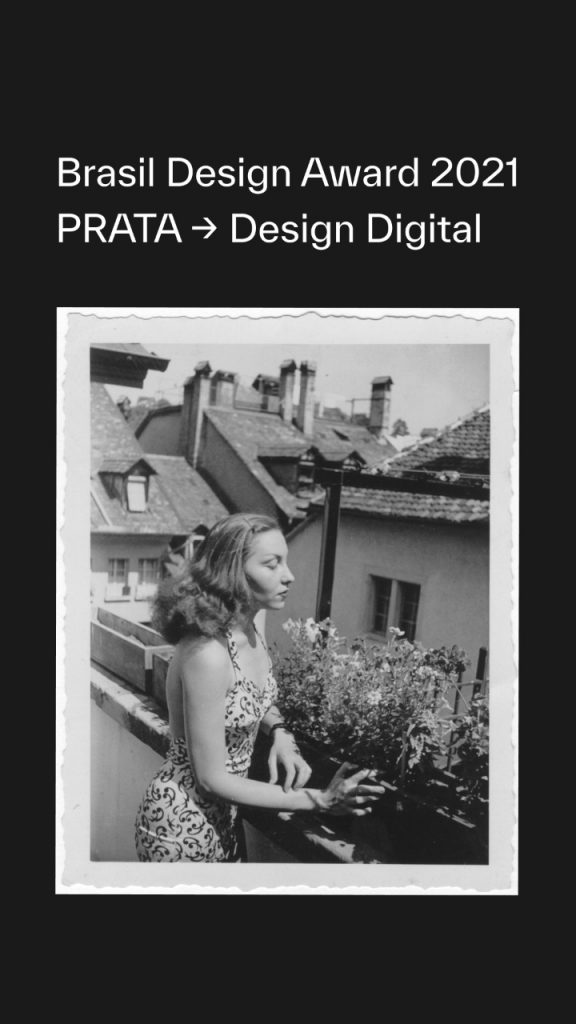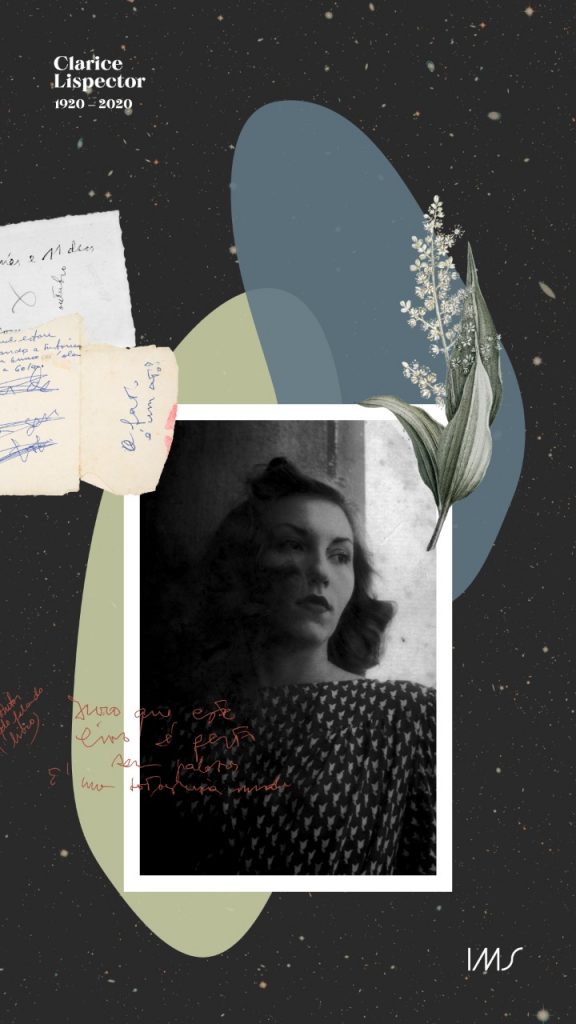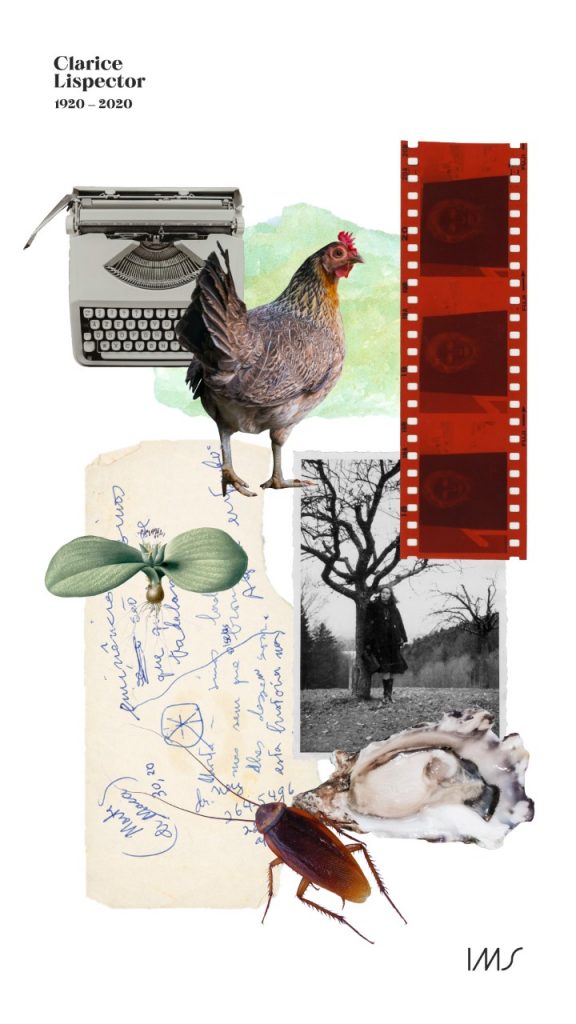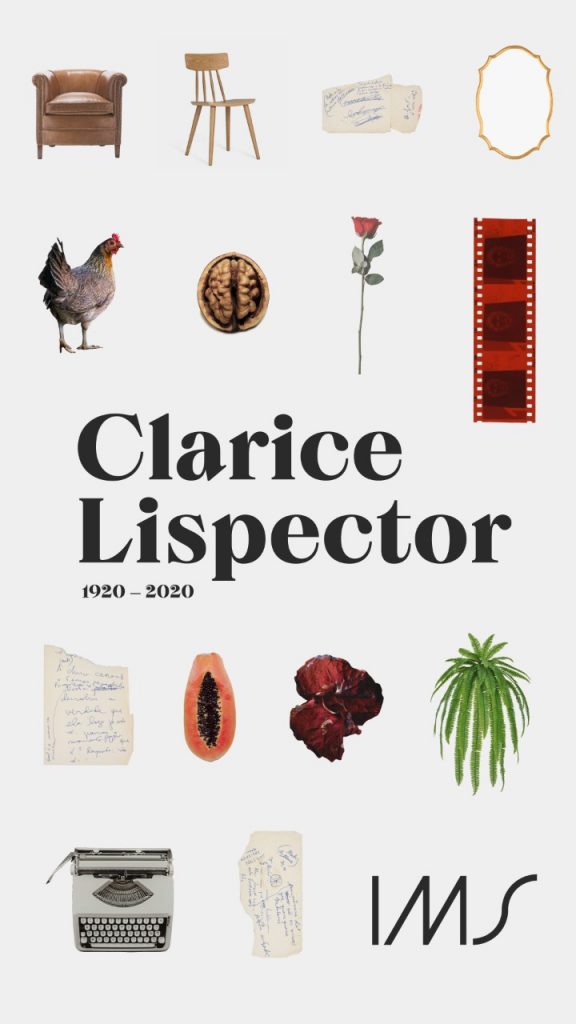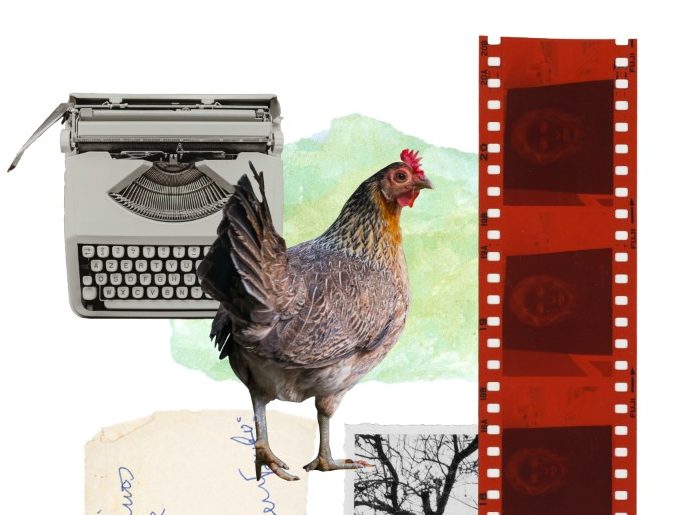
Last December, Clarice Lispector’s new website, launched on the author’s centenary, on December 10, 2020, earned second place in the Best Digital Design category of the Brasil Design Award.
The award has been given since 2009 and is organized by the Brazilian Association of Design Companies with the aim of recognizing and highlighting the creative and innovative capacity of Brazilian design. It is currently the biggest national design award, in which the main creative companies of the country participate.
Clarice Lispector’s official website was developed by Estúdio Cru in partnership with the Literature Coordinator of the Moreira Salles Institute (IMS), which holds an important part of the writer’s collection. The agency’s directors, Bernardo Winitskowski and Maria Alice Leal, explain the proposal:
“The idea was to create an immersive experience that conveyed the principles of the author’s work: visceral, poetic, and labyrinthine. This experience, which we call a narrative, is a non-linear way of navigating the timeline. The starting point was a process of profound research and investigation. Together with the IMS literature team, we developed a narrative, selecting the main visual and thematic elements that would be capable of creating the desired effect on the user.”
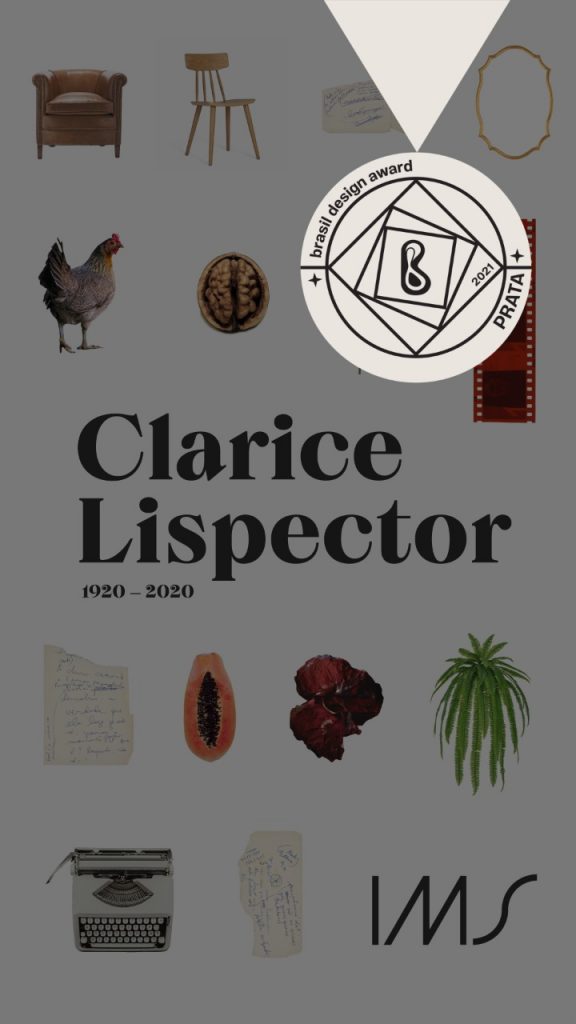
The Estúdio Cru team that participated in the creation of Clarice Lispector’s new website was composed of designers Felipe Barbosa and Fernanda Morgan, developers Pedro Rivera and Raincake (led by Heric Reis and Letícia Yokoi), producers Maria Alice Leal and Alexandre Caetano, and project manager Gérome Ibri. The curatorship, research, and content were under the responsibility of Eucanaã Ferraz, Bruno Cosentino, and Elizama Almeida, from the Moreira Salles Institute.
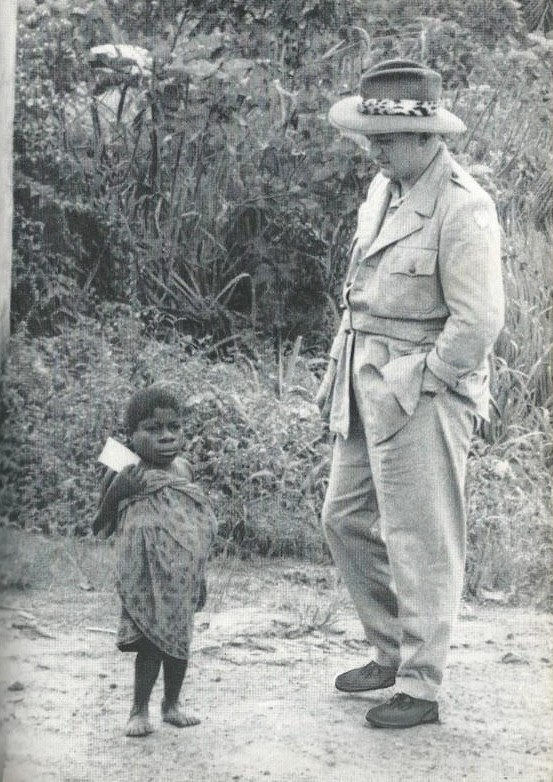
Ulysses was Clarice Lispector’s last dog, a mongrel who stole cigarette butts and queued for Coca-Cola and whiskey for visitors. He was so eccentric that he earned a robust note in the infamous periodical O Pasquim.
On December 10th, IMS Rio celebrates Clarice Lispector’s birthday. This year, we will present, in a single screening, the short film Perto de Clarice (Close to Clarice), by João Carlos Horta, from 1982, in a new digital version based on the 35mm original preserved by the Audiovisual Technical Center (CTAv). After the film screening, there will be a conversation between the writer Heloisa Buarque de Holanda, who was involved in the making of the film and is the director's widow, and Teresa Montero, author of the most recent biography of the writer, À procura da própria coisa (In Search of the Thing Itself – Rocco, 2021), mediated by the IMS literature consultant, the poet Eucanaã Ferraz.
Benjamin Moser, one of the most significant biographers of Clarice Lispector, said in an interview that one of his goals in writing Why This World, published in the United States and translated into Portuguese as Clarice, uma biografia, was to make space for a theme rarely explored by literary critics, commentators, and biographers: the writer’s “Judeity.” Most tend to limit themselves to reflecting on her “Brazilianness,” “as if one had to choose between being Jewish and being Brazilian.”
Darkness is a hollow word and one never really knows what fits inside Its dimensions are so undetermined that perhaps it could even be said that everything fits and nothing fits in it, since, being an immense storehouse of paradoxes, the ambiguous quality of immeasurable is immediately added to the primordial void that characterizes it. These attributes, thus agreed, gain particular density when prepared by the wrought of the author of The Apple in the Dark.
Caetano Veloso says that when he showed the acoustic version of his song “Odeio” (I hate), which would be included on the Cê album, to his friend and composer Jorge Mautner, the latter cried and told him that it was the most beautiful love song that he had ever heard.
Clarice Lispector will be honored at the Brazil booth at the 44th Buenos Aires International Book Fair, which will take place between April 24 and May 14.