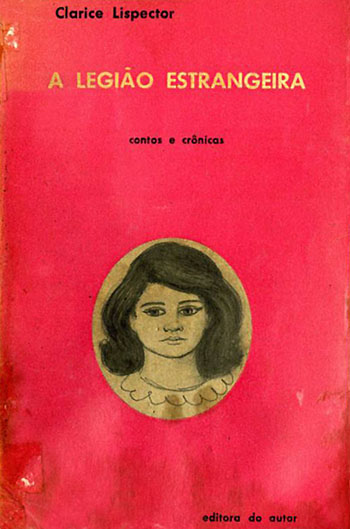
, Clarice in France. IMS Clarice Lispector, 2017. Disponível em: https://site.claricelispector.ims.com.br/en/2017/10/19/clarice-na-franca/. Acesso em: 18 May 2026.
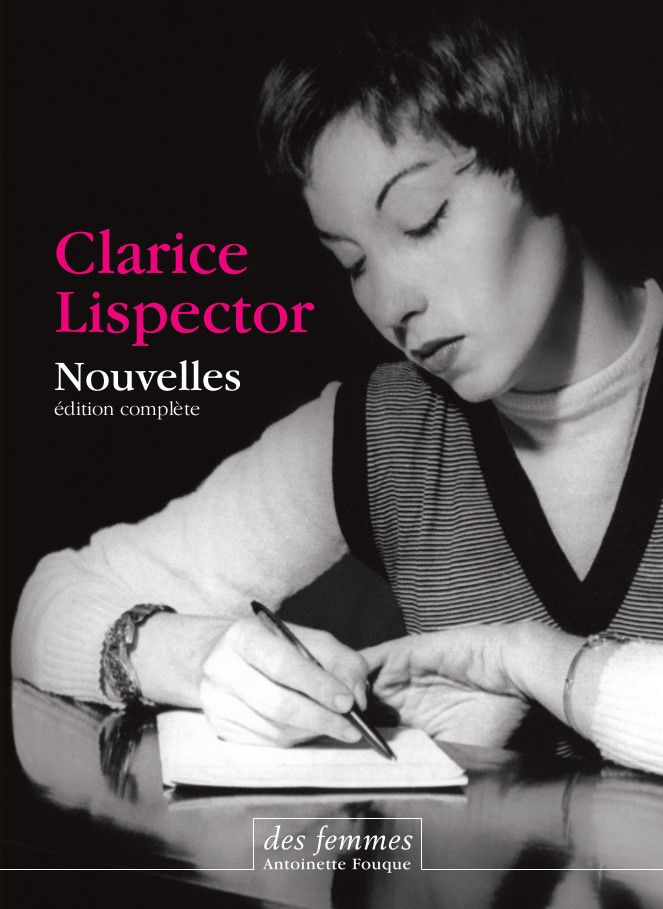
By launching in 2015, in the United States, the unprecedented collection in one book of all the short stories by Clarice Lispector, the researcher Benjamin Moser took a new step in his tireless task of disseminating abroad the work of the Brazilian writer, who deserved a beautiful and acclaimed biography. The Complete Stories (New Directions Publishing) won over audiences and critics, and was elected by The New York Times as one of the 100 best books published that year. In 2016, Rocco, Clarice’s publishing house, to the delight of numerous fans, launched the Brazilian edition of the work, entitled Todos os contos. Now, on this 19th of October, the collection of 85 texts – which begins with her first story published at the age of 19 – crosses a new frontier, reaching French bookstores under the title Nouvelles – Édition Complete, published by Des Femmes-Antoinette Fouque.
The edition – eight translators made the French version based on Brazilian texts – helps to further consolidate Clarice’s presence in France, a country that already has many admirers of the author’s work, disseminated mainly by the essayist and literary critic Hélène Cixous. An attraction for French readers is that ten of these stories were still unpublished there. And as further proof that the passion only increases, this year France will promote Clarice’s Hour, an event created by the Moreira Salles Institute to celebrate the writer’s birthday, on December 10th.
See also
by Victor Heringer
In this edition of “Clarice’s Hour,” the IMS Paulista hosted a conversation with Idra Novey, mediated by the poet and editor Alberto Martins.
by Elizama Almeida
Ulysses was Clarice Lispector’s last dog, a mongrel who stole cigarette butts and queued for Coca-Cola and whiskey for visitors. He was so eccentric that he earned a robust note in the infamous periodical O Pasquim.
by Victor Heringer
The Chandelier, Clarice Lispector’s second novel, published in 1946, was just translated into English by Benjamin Moser and Magdalena Edwards.
by Augusto Ferraz
I died. I found out when, one day, on the sidewalk of Praça Maciel Pinheiro, I lifted my head, opened my eyes, and saw myself dead, there on the plaza’s sidewalk, the two-story house on the other side of the street. My broken heart inside my chest, the two-story house on Rua do Aragão, 387, where, on the second floor, Clarice Lispector lived a happy childhood here in Recife, despite the pains of the world and experiencing and feeling, mainly, the pains of an implacable disease that would one day take Mania, her mother, away from her. I found out when, laid out on the sidewalk there under the scorching Sunday sun, I turned my head to the right and saw a man beside me, who was also looking at the house.
by Patrick Gert Bange
In a small, vast, and brilliant book called Three Steps on the Ladder of Writing, by Hélène Cixous (1993), the author is taken to three schools by writers that she loves: the School of the Dead, the School of Dreams, and the School of Roots. One of the books that transport Cixous to the School of Dreams is Clarice Lispector’s second published novel, The Chandelier.
by Elizama Almeida
One of Clarice Lispector’s most translated books, The Hour of the Star was published almost 40 years ago by José Olympio in October of 1977.