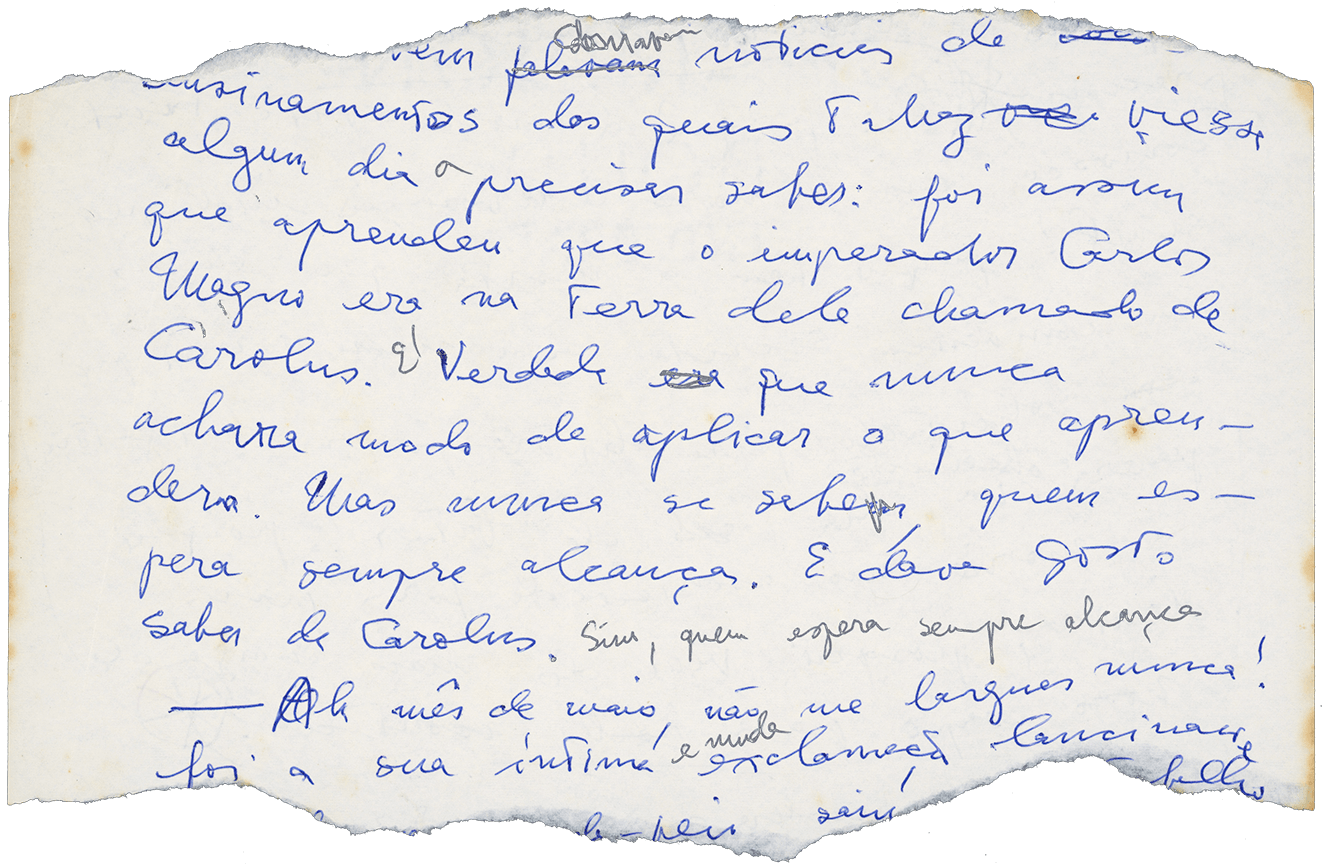
“Every morning she turned on the radio lent by one of her roommates, Maria da Penha, turning it on as low as possible so as to not disturb the others, turning it on to Clock Radio, which broadcast ‘the right time and culture,’ and no music, just dripping in sound of falling drops — each drop a minute that passed. And especially this station used those drops of minutes to run ads — she loved ads. It was the perfect station because also amongst the drops of time it gave short teachings about things she might one day need to know. That’s how she learned that the Emperor Charlemagne was called Carolus in his own land. Admittedly she never found any use for this information. But you never know, patience always patience always pays off in the end. She’d also heard that the only animal that doesn’t mate with its own offspring is the horse.”
Note used in the 102nd paragraph of The Hour of the Star. The handwriting is by Clarice.
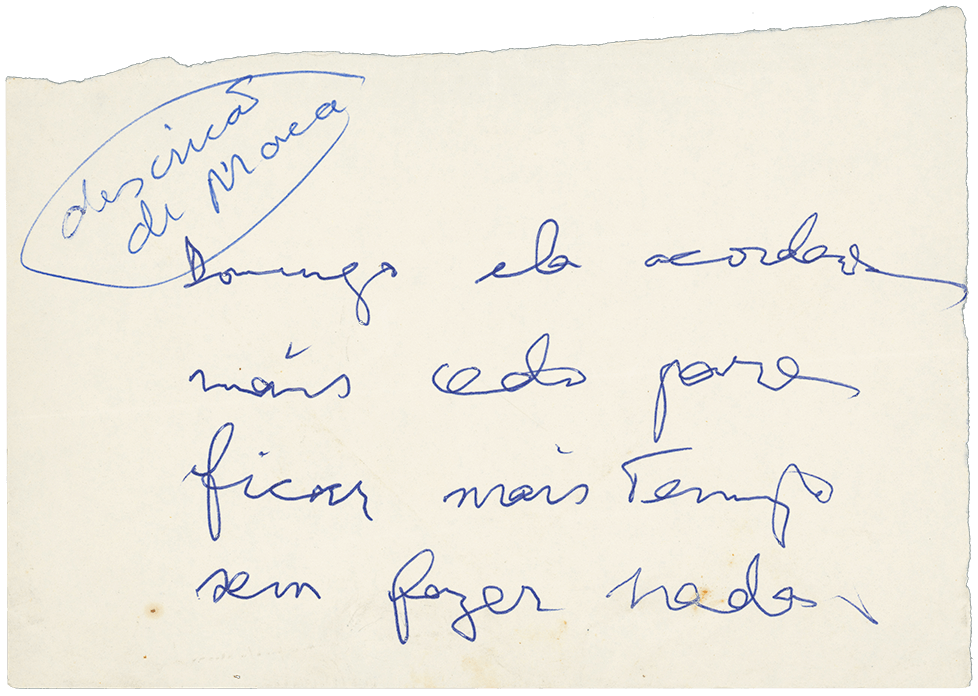
“On Sundays she got up early in order to have more time to do nothing.”
Note used in the 91st paragraph of The Hour of the Star. The handwriting is by Clarice and by Olga Borelli (observation circled, up high, on the left).
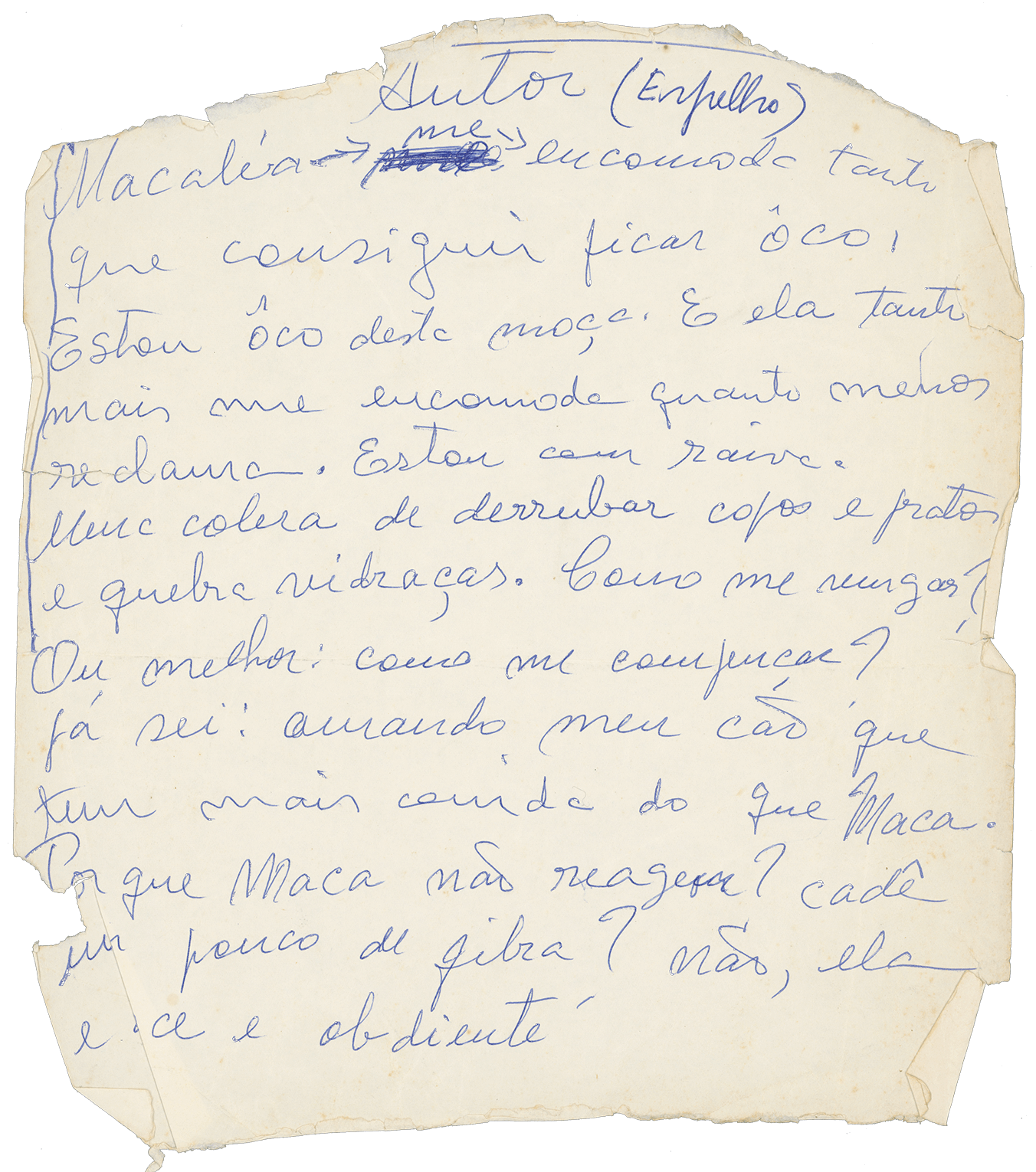
“(She makes me so uncomfortable that I feel hollow. I’m hollow of that girl. And the more uncomfortable she makes me the less she demands. I’m angry. So enraged I could smash cups and dishes and break windows. How can I avenge myself? Or rather, how can I make up for it? I’ve got it: by loving my dog who has more food than that girl. Why doesn’t she react? Can’t she grow a backbone? No, she is sweet and obedient.)”
Note used in the 62nd paragraph of The Hour of the Star. The handwriting is by Olga Borelli.
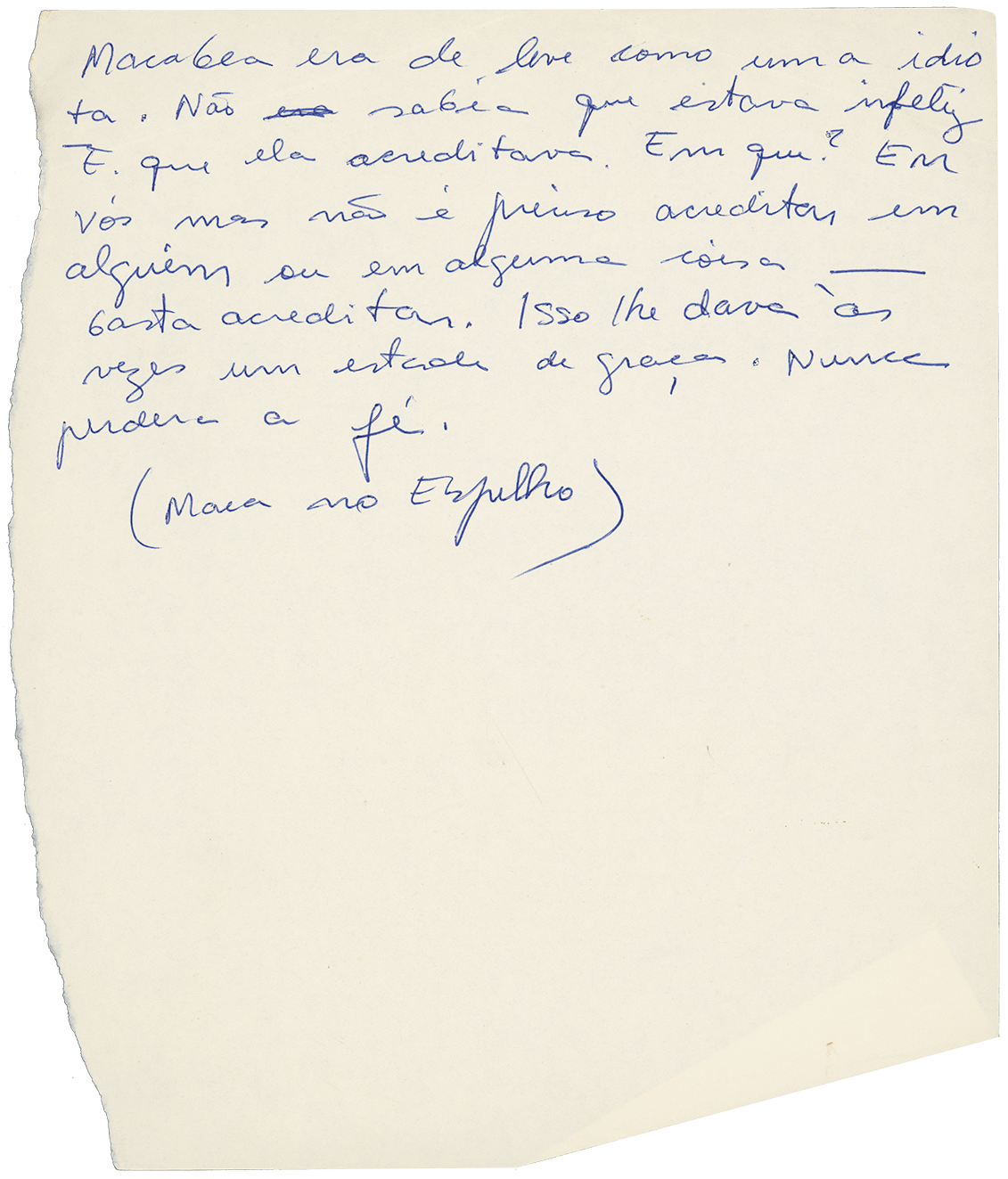
“The girl had slumped shoulders like those of a darning-woman. She’d learned to darn as a child. She might have come farther in life if she had devoted herself to the delicate task of mending, maybe even mending silk. Or luxurious fabrics: nice shiny satin, a kiss of souls. Little darning mosquito. A grain of sugar carried on an ant’s back. There was something slightly idiotic about her, but she wasn’t an idiot. She didn’t know she was unhappy. That’s because she believed. In what? In you, but you don’t have to believe in anyone or anything — you just have to believe. That sometimes gave her the state of grace. She’d never lost faith.”
Note used in the 61st paragraph of The Hour of the Star. The handwriting is by Olga Borelli.
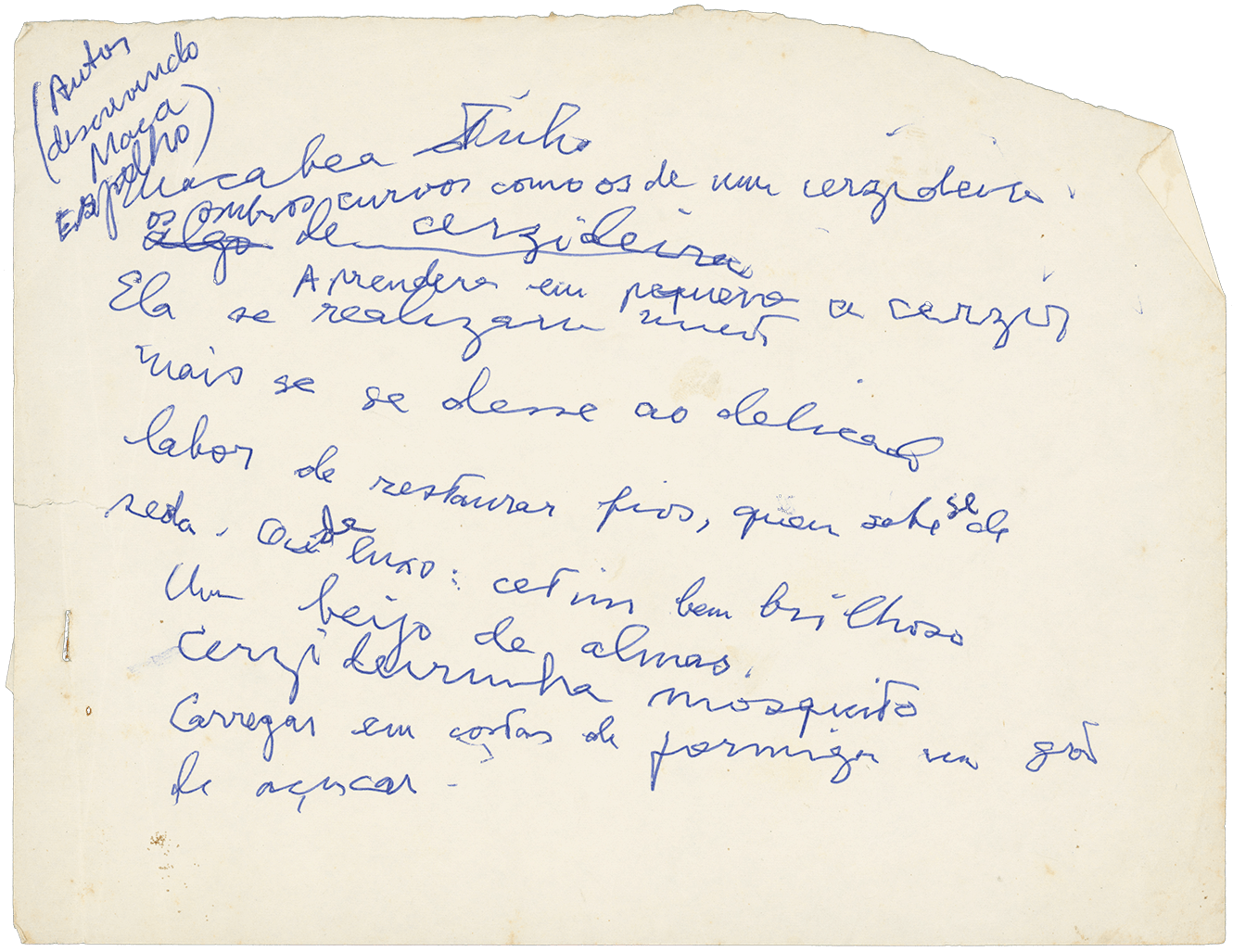
“The girl had slumped shoulders like those of a darning-woman. She’d learned to darn as a child. She might have come farther in life if she had devoted herself to the delicate task of mending, maybe even mending silk. Or luxurious fabrics: nice shiny satin, a kiss of souls. Little darning mosquito. A grain of sugar carried on an ant’s back. There was something slightly idiotic about her, but she wasn’t an idiot. She didn’t know she was unhappy. That’s because she believed. In what? In you, but you don’t have to believe in anyone or anything — you just have to believe. That sometimes gave her the state of grace. She’d never lost faith.”
Note used in the 61st paragraph of The Hour of the Star. The handwriting is by Clarice and by Olga Borelli (observation between parentheses, up high, on the left).
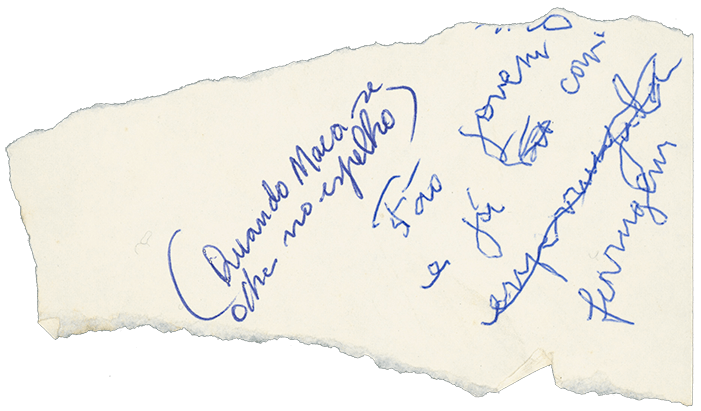
“After receiving this warning she went to the bathroom to be alone because she was all shaken. She mechanically looked at herself in the mirror atop the filthy and cracked sink, full of hairs, which matched her own life so well. It seemed to her that the dark and tarnished mirror didn’t reflect any image. Could her physical existence have vanished? This illusion immediately passed and she made out her face entirely distorted by cheap little mirror, her nose as huge as a clown’s papier-mâché nose. She looked at herself and lightly thought: so young and already so rusted.”
Note used in the 58th paragraph of The Hour of the Star. The handwriting is by Clarice and by Olga Borelli (observation between parentheses).
“I write because I have nothing better to do in this world: I am superfluous and last in the world of men. I write because I am desperate and weary. I can no longer bear the routine of my existence and, were it not for the constant novelty of writing, I should die symbolically each day. Yet I am prepared to leave quietly by the back door. I have experienced almost everything, even passion and despair. Now I only wish to possess what might have been but never was.”
Note used in the 40th paragraph of The Hour of the Star. The handwriting is by Clarice.
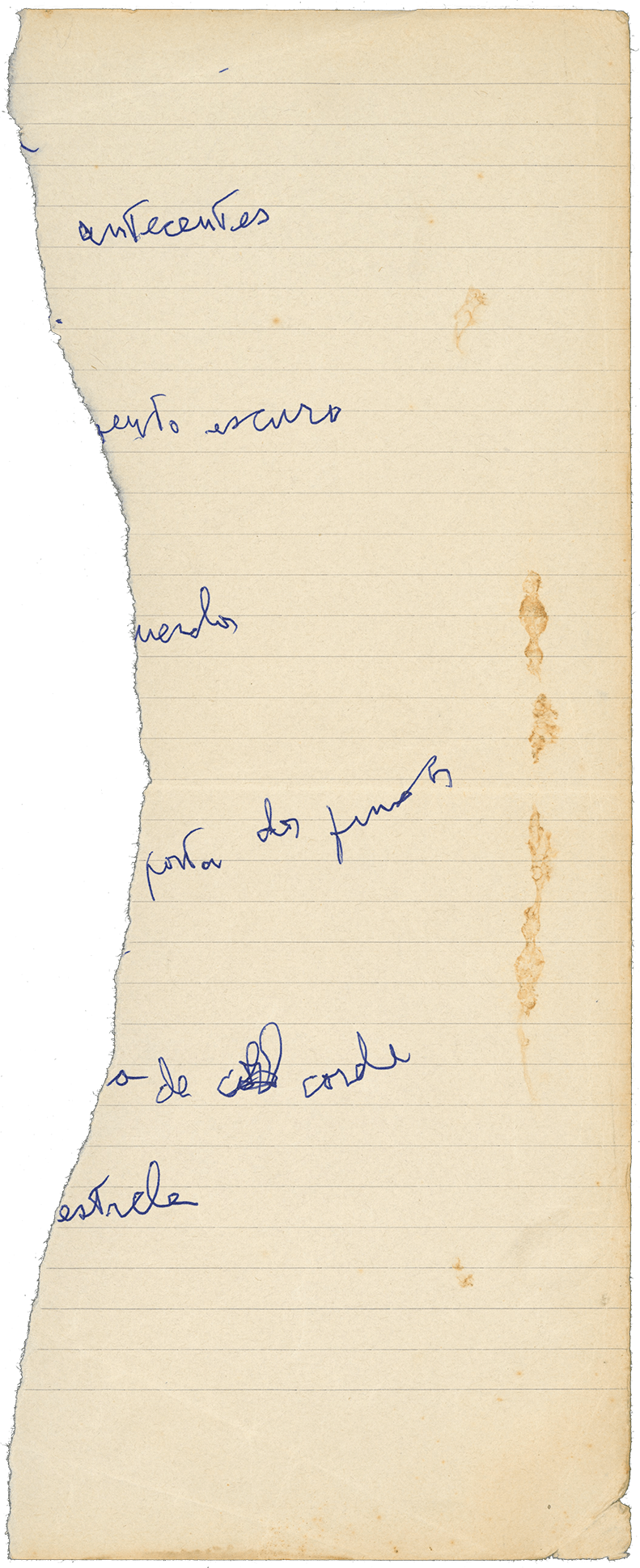
“In writing this story, I shall yield to emotion and I know perfectly well that every day is one more day stolen from death. In no sense an intellectual, I write with my body. And what I write is like a dank haze. The words are sounds transfused with shadows that intersect unevenly, stalactites, woven lace, transposed organ music. I can scarcely invoke the words to describe this pattern, vibrant and rich, morbid and obscure, its counterpoint the deep bass of sorrow. Allegro con brio. I shall attempt to extract gold from charcoal. I know that I am holding up the narrative and playing at ball without a ball. Is the fact an act? I swear that this book is composed without words: like a mute photograph. This book is a silence: an interrogation.”
Note used in the 21st paragraph of The Hour of the Star. The handwriting is by Clarice and by Olga Borelli (observation between parentheses, on the left).
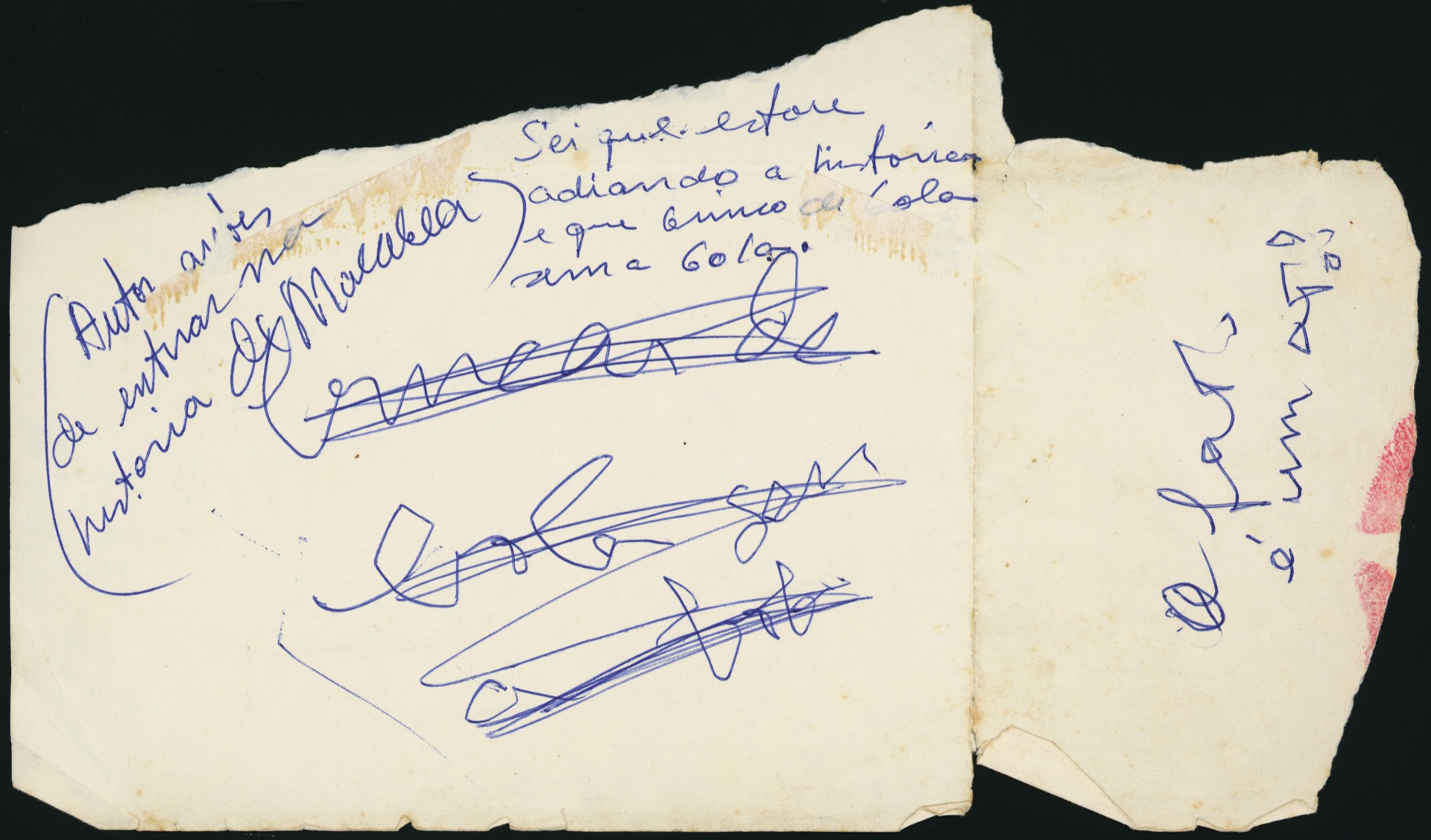
“In writing this story, I shall yield to emotion and I know perfectly well that every day is one more day stolen from death. In no sense an intellectual, I write with my body. And what I write is like a dank haze. The words are sounds transfused with shadows that intersect unevenly, stalactites, woven lace, transposed organ music. I can scarcely invoke the words to describe this pattern, vibrant and rich, morbid and obscure, its counterpoint the deep bass of sorrow. Allegro con brio. I shall attempt to extract gold from charcoal. I know that I am holding up the narrative and playing at ball without a ball. Is the fact an act? I swear that this book is composed without words: like a mute photograph. This book is a silence: an interrogation.”
Note used in the 21st paragraph of The Hour of the Star. The handwriting is by Clarice and by Olga Borelli (observation between parentheses, on the left, and note beside it).
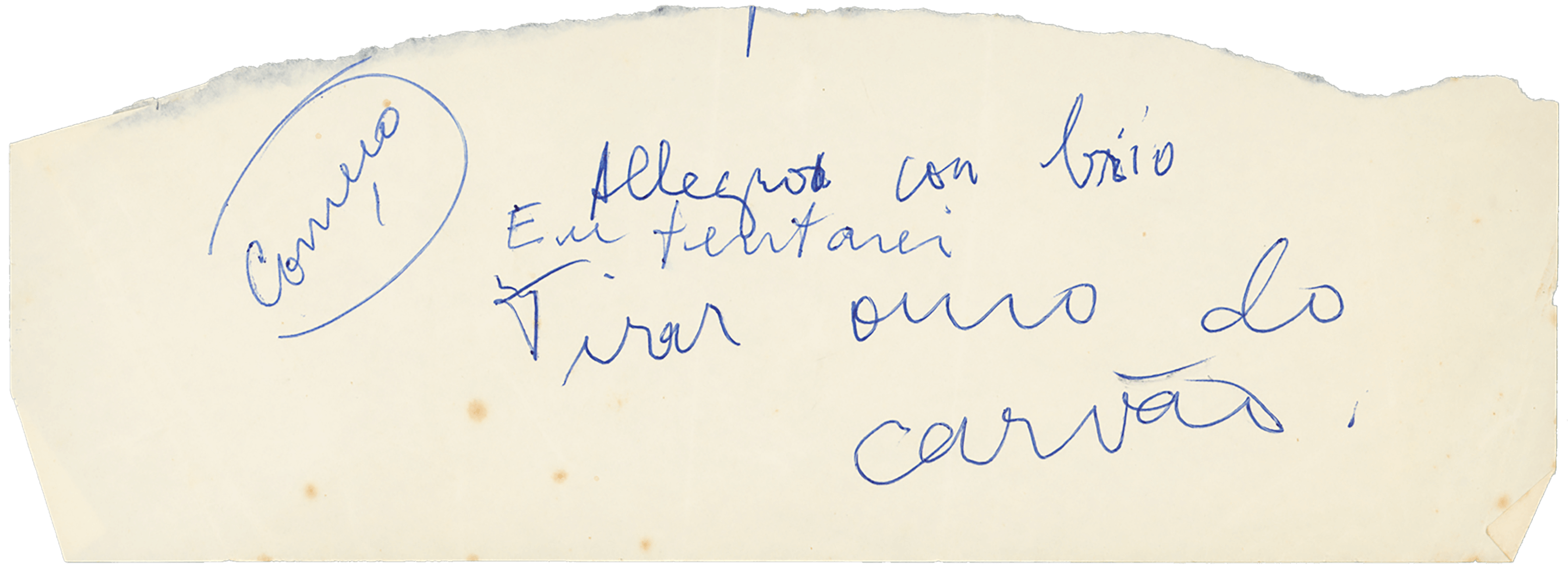
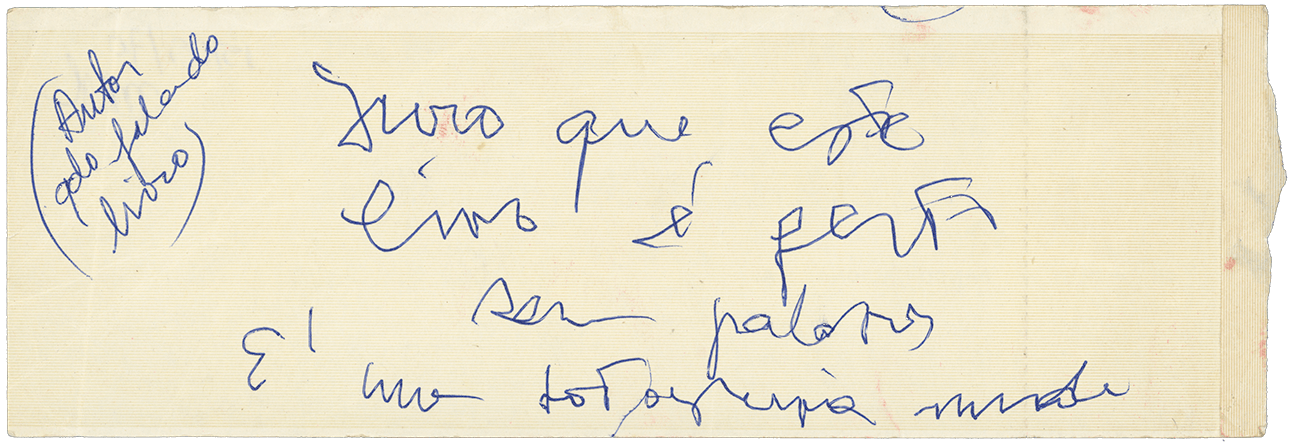
“In writing this story, I shall yield to emotion and I know perfectly well that every day is one more day stolen from death. In no sense an intellectual, I write with my body. And what I write is like a dank haze. The words are sounds transfused with shadows that intersect unevenly, stalactites, woven lace, transposed organ music. I can scarcely invoke the words to describe this pattern, vibrant and rich, morbid and obscure, its counterpoint the deep bass of sorrow. Allegro con brio. I shall attempt to extract gold from charcoal. I know that I am holding up the narrative and playing at ball without a ball. Is the fact an act? I swear that this book is composed without words: like a mute photograph. This book is a silence: an interrogation.”
Note used in the 21st paragraph of The Hour of the Star. The handwriting is by Clarice and by Olga Borelli (observation circled, on the left).

