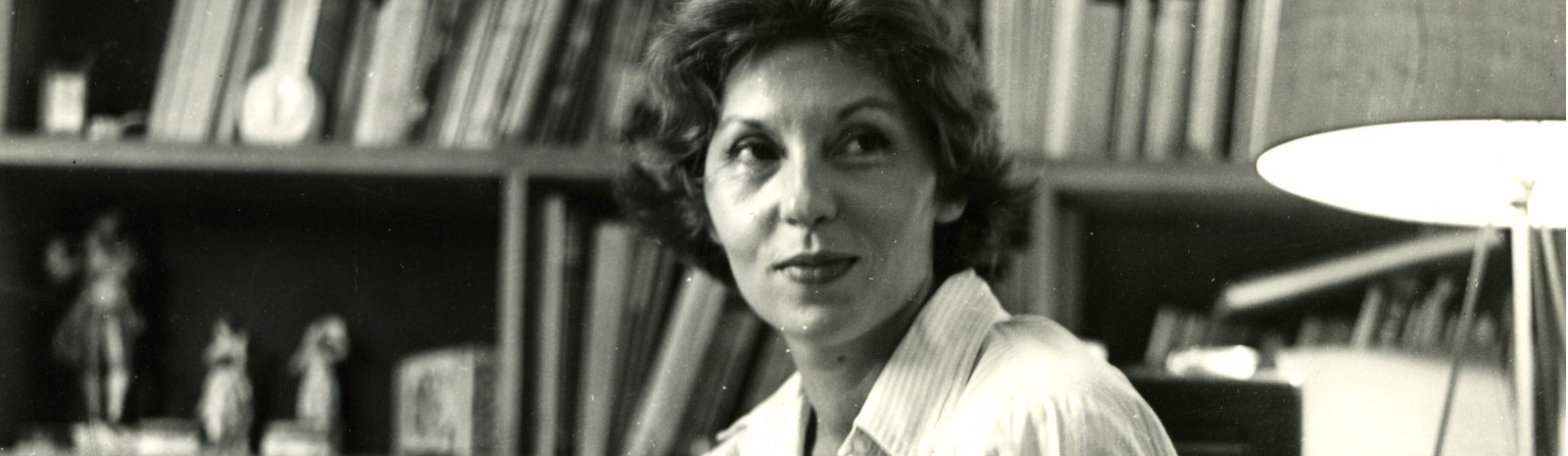
Celebrated in Argentina, New York, and Paris, Clarice’s Hour 2016, organized by the Moreira Salles Institute, was divided last year between the themes of correspondence and translation.
Clarice Lispector’s oeuvre has been consolidated through recent translations into French, Spanish, Greek, and, above all, English. It is certainly true that the publication of all the stories in a single volume, The Complete Stories, included in the New York Times best books list, provoked a new wave of interest and readers. The arduous and, at the same time, delicate transposition of Lispector’s stories from Portuguese into English was the responsibility of Katrina Dodson – whose efforts were recognized with the Pen Translation Prize.
A little more of the translation work could be appreciated on December 10, 2016, with a chat between Katrina Dodson and Paloma Vidal, a Brazilian poet and professor who translated and wrote the preface to Un soplo de vida (Um sopro de vida/A Breath of Life) and La legión extranjera (A legião estrangeira/The Foreign Legion), released by the Argentinian publisher Corregidor in 2010 and 2011.
In the second part of the celebration, Clarice’s Hour turns its attention to the rich set of affectionate letters Clarice sent to her sisters, Tania Kaufman and Elisa Lispector, during the period in which she was living outside Brazil. From the selection of this set of more than 150 items under the care of the IMS and directed by Bruno Lara Resende, at 6:30 pm the actresses Georgiana Góes, Gisele Fróes, and Raquel Iantas performed a reading of the letters – there are themes such as the difficulty of publishing her second novel, O lustre (The Chandelier), the marriage dynamic, the end of the Second World War, and the birth of her two sons, Pedro and Paulo.
Both events can be viewed with complete details available below:
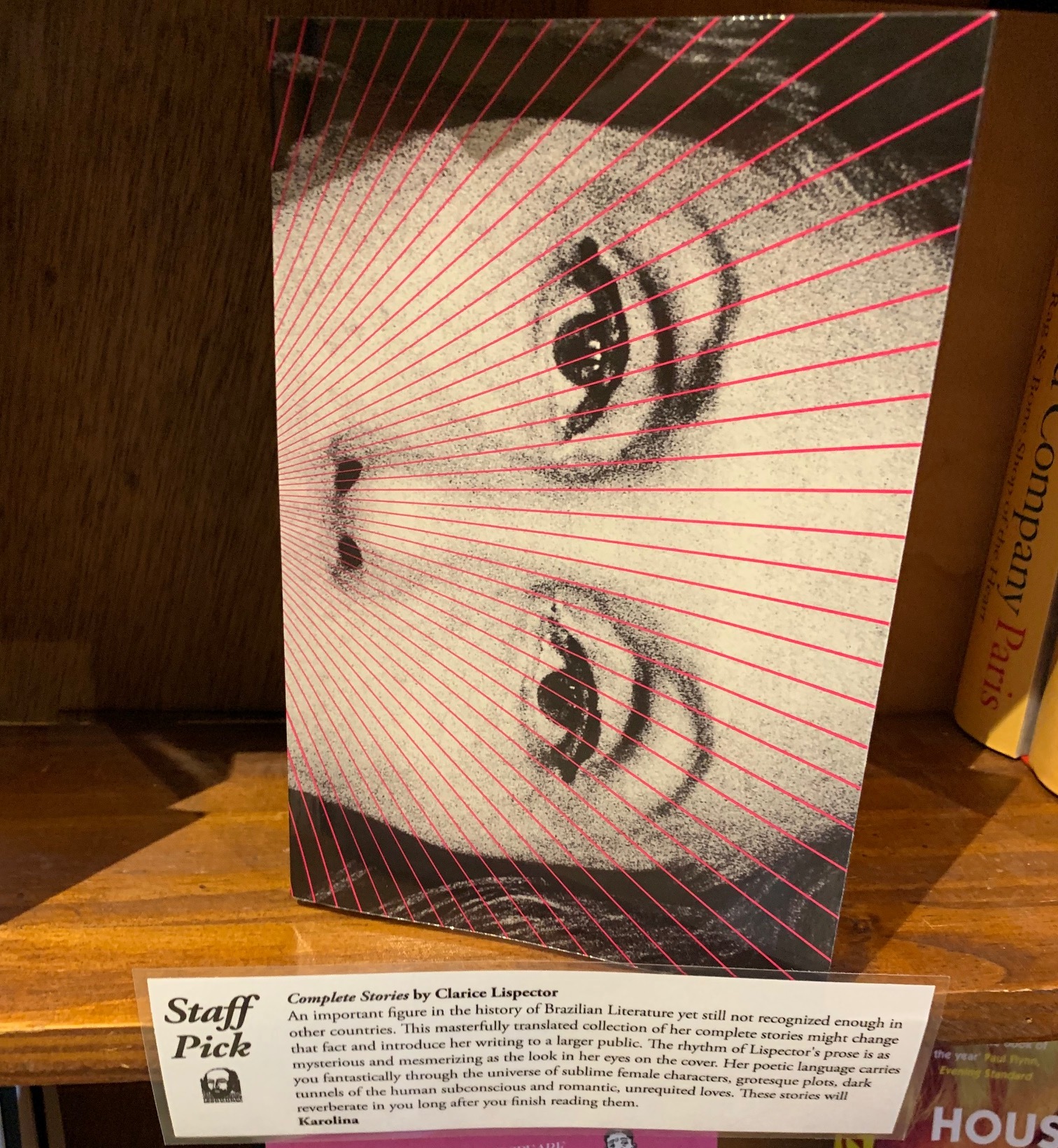
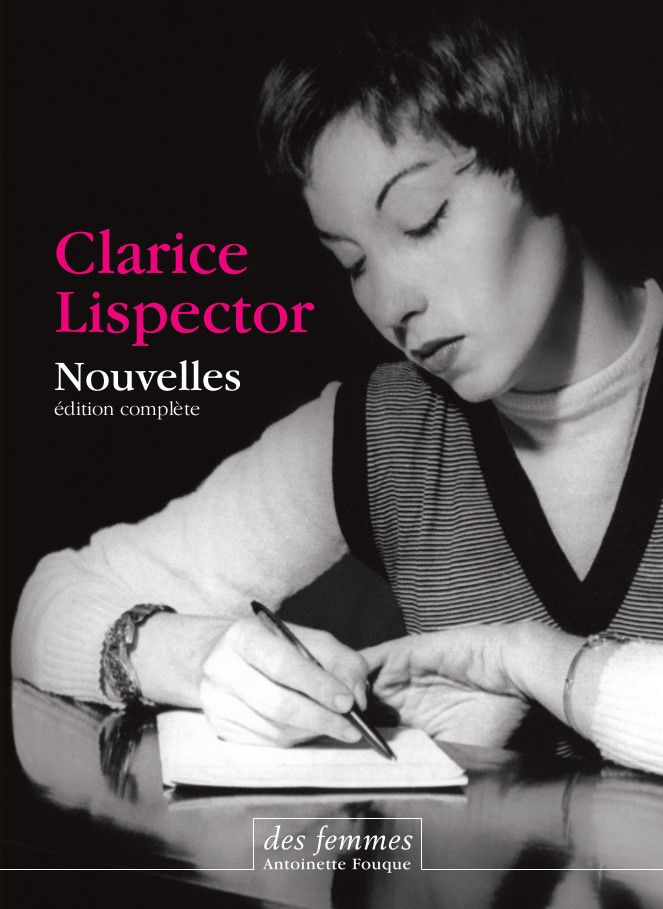
At the 35th edition of the Paris Book Fair, Brazil was the country of honor. The program was marked by an exhibition dedicated to Clarice Lispector at Éditions des Femmes,
In the 2025 edition of Clarice’s Hour, we will celebrate, through the voices and presentations of kids, the children's story “Laura’s Intimate Life,” published as a book by Clarice Lispector in 1974. In this film, six children retell, act, illustrate, and co-direct the story of Laura the hen, her husband Luís, and their son Hermany in Dona Luísa's henhouse.
I died. I found out when, one day, on the sidewalk of Praça Maciel Pinheiro, I lifted my head, opened my eyes, and saw myself dead, there on the plaza’s sidewalk, the two-story house on the other side of the street. My broken heart inside my chest, the two-story house on Rua do Aragão, 387, where, on the second floor, Clarice Lispector lived a happy childhood here in Recife, despite the pains of the world and experiencing and feeling, mainly, the pains of an implacable disease that would one day take Mania, her mother, away from her. I found out when, laid out on the sidewalk there under the scorching Sunday sun, I turned my head to the right and saw a man beside me, who was also looking at the house.
Clarice Lispector spent her childhood in Recife, but at the age of 15 she moved with her father and two sisters to Rio de Janeiro. It was in the then capital of Brazil that the writer lived her youth and early adult life: she completed high school, graduated from law school, had her first professional experiences in the press, got married, and in 1943, released her first book Near to the Wild Heart.
In this video lesson, Mell Brites, author of the book As Crianças de Clarice: Narrativas da Infância e Outras Revelações (The Children of Clarice: Narratives of Childhood and Other Revelations), addresses the theme of childhood in Clarice Lispector’s literature, both in her children's books and in those aimed at an adult audience.
, LispectorFest at the University of Tennessee. IMS Clarice Lispector, 2017. Disponível em: https://site.claricelispector.ims.com.br/en/2017/01/04/lispectorfest-na-universidade-do-tennessee/. Acesso em: 15 April 2026.
Every year the University of Tennessee prepares AuthorFest, a series of activities to celebrate the work of a single author. During the month of October 2016, in its second edition, AuthorFest paid tribute to Clarice Lispector.
Among the events offered to the public, in a collaboration between the Department of Modern Foreign Languages and Literatures and the Knox County Public Library, there was a guided reading of The Mystery of the Thinking Rabbit, an exhibition of works of art by Professor Rubens Ghenov inspired by the novel The Passion According to G.H., and a session of the film The Hour of the Star, which was directed by Suzana Amaral, followed by a discussion mediated by Euridice Silva-Filho, research professor at the University of Tennessee-Knoxville.
One of the most anticipated activities of LispectorFest was the lecture by Katrina Dodson, translator of the Complete Stories (New Directions, 2016). In “Rediscovering Clarice” Katrina comments, from her own experience, on the influence of the recent translation in the construction of a kind of “Lispectormania.”
The IMS, in partnership with UT Knoxville’s College of Arts and Sciences, has made this lecture available in full.
In the book Rio de Clarice, the author's pleasure in wandering the streets, forests, parks, and beaches of Rio de Janeiro, where she arrived as a 15-year-old, is evident.
The work of Clarice Lispector revolves around on two notions: the symbol and the thing. The thing, physics, and the symbol, metaphysics; the thing, immanence, and the symbol, transcendence; the thing, the body, and the symbol, language; the thing, existence, and the symbol, the saying; the thing, the event, and the symbol, the way to make it possible to read the nonsymbolizable thing.
Every year, in the liturgical calendar of the Catholic Church, Carnival is followed by Lent, a period in which the faithful withdraw from mundane life to dedicate themselves to sacrifices, charity, and prayer.
In addition to confirming the value of the biographical genre as a privileged means to meet the demands of a curious public about the past of famous personalities, Teresa Montero challenges the genre’s conventions by reconstructing the family life, personal experiences, friendships, and creative process of Clarice Lispector, an author who, with all her strengths, gave life to her vocation for literature as a fatality and a salvation.