In the 2025 edition of Clarice’s Hour, we will celebrate, through the voices and presentations of kids, the children’s story “Laura’s Intimate Life,” published as a book by Clarice Lispector in 1974. In this film, six children retell, act, illustrate, and co-direct the story of Laura the hen, her husband Luís, and their son Hermany in Dona Luísa’s henhouse.
The short film is the fruit of work that took place during the 2025 school year and involved professionals from the Literature Department and students from the Rio de Janeiro municipal school system, combining education, literature, and art, in three stages. In the preparation phase, each child received a copy of the book (donated by the publisher Rocco) and participated in a shared reading activity; next, they discussed the story with their parents at home; and in the third stage – which was creative and artistic – they acted out a few passages from the story and illustrated three scenes. These are the drawings that bring color to the film in a unique retelling of the story of Laura the hen.
A vida íntima de Laura (Laura’s Intimate Life) was conceived by Bruno Cosentino and Eucanaã Ferraz, directed by Laura Liuzzi and Bruno Cosentino, edited by Laura Liuzzi, produced by Bruno Cosentino, and supported by the Rocco publishing house.
Correio para mulheres (Women’s Mail), edited by Aparecida Maria Nunes, includes texts by Clarice Lispector directed towards a female readership and written in three distinct moments in the writer’s career.
This August, Todas as crônicas will be released, a volume that brings together for the first time all the chronicles written by Clarice Lispector for newspapers and magazines.
The Brazil LAB is an interdisciplinary initiative at Princeton University that considers Brazil to be a crucial nexus for us to understand today’s most pressing issues. Based at PIIRS (Princeton Institute of International and Regional Studies), the LAB brings together professors, researchers, and students from more than 20 different university departments (from the social to the natural sciences, from engineering to the arts and humanities) in interaction with dozens of researchers from academic institutions of excellence.
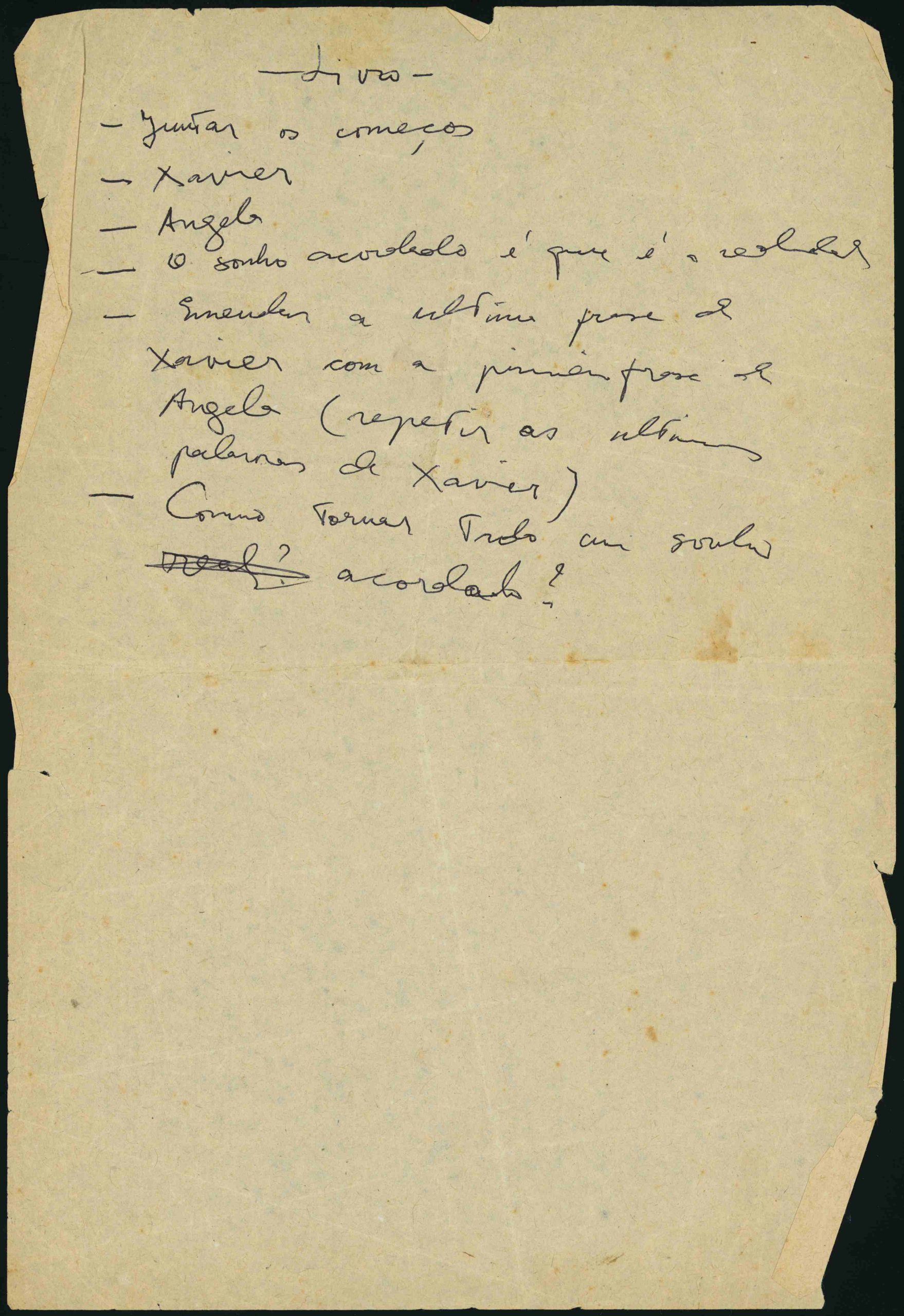
The second part of the original manuscripts of Um sopro de vida (A Breath of Life) was delivered by the writer's son, Paulo Gurgel Valente, to be incorporated into the Clarice Lispector Collection