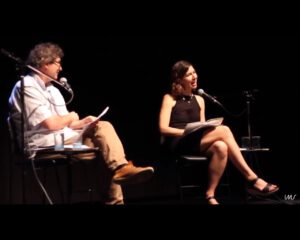
, Exhibition at the Paris Book Fair. IMS Clarice Lispector, 2015. Disponível em: https://site.claricelispector.ims.com.br/en/2015/04/13/exposicao-no-salao-do-livro-de-paris/. Acesso em: 05 January 2026.
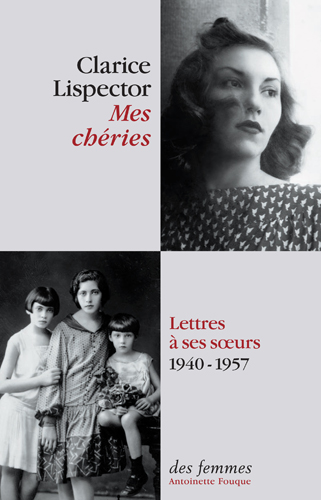
At the 35th edition of the Paris Book Fair, one of the most important literary events today, Brazil was the country of honor. The program took place between March 20th and 23rd of that year and was marked by an exhibition dedicated to Clarice Lispector at Éditions des Femmes, the publishing house responsible for the launch of Mes chérie – Lettres à ses sœurs. The book, organized by Teresa Monteiro and prefaced by Nádia Battella Gotlib, consists of 120 letters sent to her sisters Tânia and Elisa Lispector during the 1940s and 1950s, a period in which Clarice accompanied her diplomat husband Maury Gurgel Valente in several countries. Mes chérie, which has already been translated and published in Spanish (Queridas mías) by the publisher Siruela, reveals an intimate and affective side of the author.
Also on the occasion of the Book Salon, the interview with Paulo Gurgel Valente produced by the Moreira Salles Institute as one of the celebrations of the Clarice’s Hour event, in December 2014, was subtitled and broadcast at the French publisher’s venue.
See also
by Equipe IMS
Last December, Clarice Lispector’s new website, launched on the author’s centenary, on December 10, 2020, earned second place in the Best Digital Design category of the Brasil Design Award.
by Manya Millen
In the book Rio de Clarice, the author's pleasure in wandering the streets, forests, parks, and beaches of Rio de Janeiro, where she arrived as a 15-year-old, is evident.
by Equipe IMS
The Brazil LAB is an interdisciplinary initiative at Princeton University that considers Brazil to be a crucial nexus for us to understand today’s most pressing issues. Based at PIIRS (Princeton Institute of International and Regional Studies), the LAB brings together professors, researchers, and students from more than 20 different university departments (from the social to the natural sciences, from engineering to the arts and humanities) in interaction with dozens of researchers from academic institutions of excellence.
by Alexandre Nodari
It has become commonplace to say that Clarice Lispector’s writing seeks to overcome the limits of language which the author names “it,” “nucleus,” “thing,” “unsayable,” “silence.”
by Bruno Cosentino
Clarice Lispector wrote about sex only once. It was in the book A via crúcis do corpo (The Via Crucis of the Body).
by Paloma Vidal
A chronicle of the encounter with the manuscripts of The Hour of the Star by Paloma Vidal for the new edition of the novella.