, “The Chandelier” is published in English. IMS Clarice Lispector, 2018. Disponível em: https://site.claricelispector.ims.com.br/en/2018/04/05/o-lustre-e-publicado-em-ingles/. Acesso em: 13 December 2025.
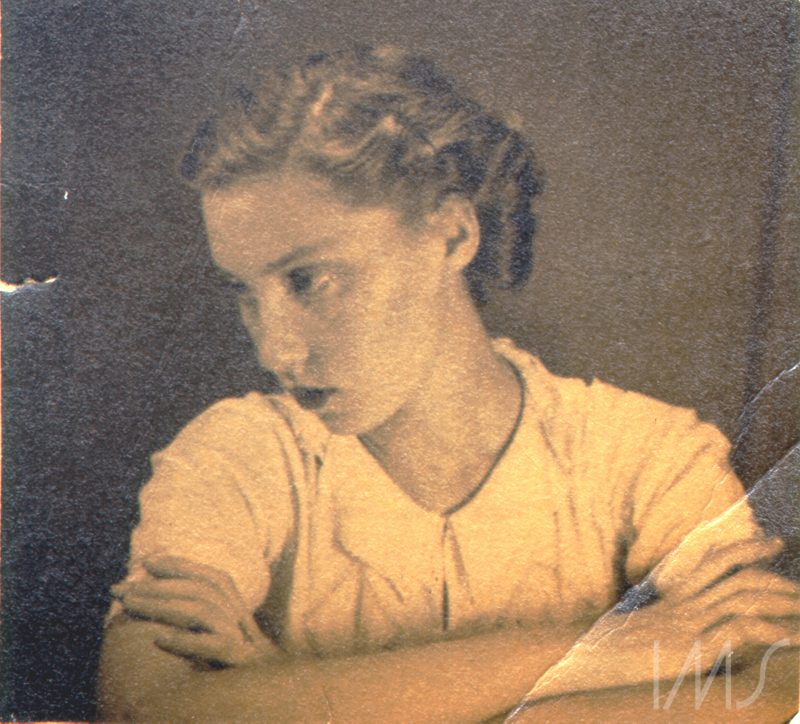
The Chandelier, Clarice Lispector’s second novel, published in 1946, was just translated into English by Benjamin Moser and Magdalena Edwards. The book is another of a series of translations of the author’s works that have been published in the past few years. In a statement to The New York Times, Moser observes that this may be the strangest and hardest book by the Brazilian writer (who was born in Ukraine in 1920). The British critic Christopher Ricks, for his part, sees it as a miniature of Clarice’s universe:
So many of the themes, philosophical inquiries and character types that appear [in The Chandelier] will return, honed as Lispector refines her style and hardens them into the diamond like perfection of her final books, which are narrated in jagged aphorisms – ‘anti literature’ she called them.
The American newspaper furthermore celebrates the rediscovery of Clarice in the United States as one of the true literary events of the 21st century, highlighting the singularity of her writing, which is marked by a unique punctuation and syntax, in addition to a capacity to resignify words according to her own wishes – “No one sounds like Lispector (…). No one thinks like her,” the journalist Parul Sehgal concludes.
A few days after the American newspaper featured The Chandelier, the editor Gregory Cowles included the book on the list of ten reading suggestions that he made for the prestigious Book Review column.
Read The New York Times article here.
*Photo: Unidentified photographer/ Clarice Lispector Collection/ IMS
See also
 by Cicero Cunha Bezerra
Michel de Certeau, in his La fable mystique, addresses an important aspect in the relation between idiocy and holiness in the first centuries, particularly in Christian literature, namely: a mode of isolation in the crowd. Idiocy, in the form of madness, is attributed to the crowd, and additionally, is established as a provocation, a transgression in the field of the “right-minded.”
 by João Camillo Penna
The work of Clarice Lispector revolves around on two notions: the symbol and the thing. The thing, physics, and the symbol, metaphysics; the thing, immanence, and the symbol, transcendence; the thing, the body, and the symbol, language; the thing, existence, and the symbol, the saying; the thing, the event, and the symbol, the way to make it possible to read the nonsymbolizable thing.
 by Equipe IMS
The film Clarice's Days in Washington captures a very different and decisive moment in the life and work of the writer, when she lived in the American capital with her family, between 1952 and 1959. In addition to a significant number of unpublished photographs – which record her domestic environment and interactions with friends – there are precious images filmed during a public event, in which the writer, her husband Maury Gurgel Valente, their son Paulo, in addition to friends of the couple appear.
 by Equipe IMS
On December 10th, IMS Rio celebrates Clarice Lispector’s birthday. This year, we will present, in a single screening, the short film Perto de Clarice (Close to Clarice), by João Carlos Horta, from 1982, in a new digital version based on the 35mm original preserved by the Audiovisual Technical Center (CTAv). After the film screening, there will be a conversation between the writer Heloisa Buarque de Holanda, who was involved in the making of the film and is the director's widow, and Teresa Montero, author of the most recent biography of the writer, À procura da própria coisa (In Search of the Thing Itself – Rocco, 2021), mediated by the IMS literature consultant, the poet Eucanaã Ferraz.
 by Equipe IMS
Clarice Lispector spent her childhood in Recife, but at the age of 15 she moved with her father and two sisters to Rio de Janeiro. It was in the then capital of Brazil that the writer lived her youth and early adult life: she completed high school, graduated from law school, had her first professional experiences in the press, got married, and in 1943, released her first book Near to the Wild Heart.
 by Yudith Rosenbaum
The word “unfamiliar” is used by Clarice Lispector in several of her works. To be precise, in the original Portuguese, Clarice employed the neologism infamiliar, which is not in the dictionary, though it cannot be affirmed that the author is the source of this term in Brazilian literature. Nonetheless, by mentioning the word “unfamiliar” at least sixteen times, whether in novels, short stories, or chronicles, the author makes this unique signifier an object of greater attention.