, “The Chandelier” is published in English. IMS Clarice Lispector, 2018. Disponível em: https://site.claricelispector.ims.com.br/en/2018/04/05/o-lustre-e-publicado-em-ingles/. Acesso em: 19 April 2026.
The Chandelier, Clarice Lispector’s second novel, published in 1946, was just translated into English by Benjamin Moser and Magdalena Edwards. The book is another of a series of translations of the author’s works that have been published in the past few years. In a statement to The New York Times, Moser observes that this may be the strangest and hardest book by the Brazilian writer (who was born in Ukraine in 1920). The British critic Christopher Ricks, for his part, sees it as a miniature of Clarice’s universe:
So many of the themes, philosophical inquiries and character types that appear [in The Chandelier] will return, honed as Lispector refines her style and hardens them into the diamond like perfection of her final books, which are narrated in jagged aphorisms – ‘anti literature’ she called them.
The American newspaper furthermore celebrates the rediscovery of Clarice in the United States as one of the true literary events of the 21st century, highlighting the singularity of her writing, which is marked by a unique punctuation and syntax, in addition to a capacity to resignify words according to her own wishes – “No one sounds like Lispector (…). No one thinks like her,” the journalist Parul Sehgal concludes.
A few days after the American newspaper featured The Chandelier, the editor Gregory Cowles included the book on the list of ten reading suggestions that he made for the prestigious Book Review column.
Read The New York Times article here.
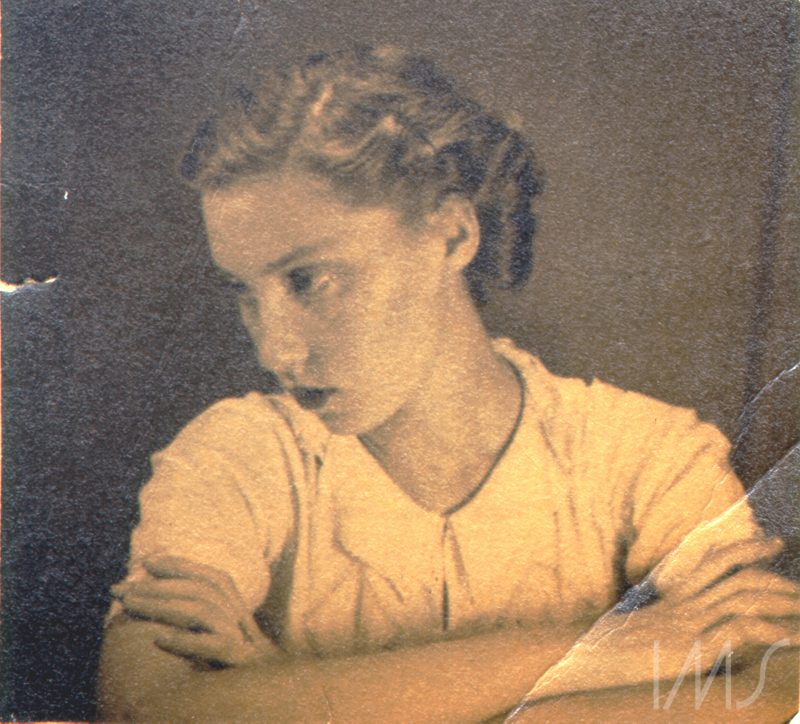
*Photo: Unidentified photographer/ Clarice Lispector Collection/ IMS
See also
by Elizama Almeida
At the 35th edition of the Paris Book Fair, Brazil was the country of honor. The program was marked by an exhibition dedicated to Clarice Lispector at Éditions des Femmes,
by Equipe IMS
The film portrays the famous Ulisses, Clarice Lispector’s dog and a prominent character in her life and fiction. He is present in the posthumous novel A Breath of Life, he is the narrator of the children’s book Quase de verdade (Almost True), he was mentioned in countless chronicles, and today he is immortalized, alongside his owner, in a bronze statue at Leme Beach, in Rio de Janeiro.
by Elizama Almeida
According to a survey done by YouPIX in June 2012, Clarice is the most quoted writer on Twitter. Every day more than 3.5 thousand phrases by the author – or attributed to her – are posted on there.
by Elizama Almeida
In partnership with the Department of Humanities at Columbia University, the IMS presents the international seminar The Clarice Factor: Aesthetics, Gender, and Diaspora in Brazil.
by Matildes Demetrio dos Santos
In addition to confirming the value of the biographical genre as a privileged means to meet the demands of a curious public about the past of famous personalities, Teresa Montero challenges the genre’s conventions by reconstructing the family life, personal experiences, friendships, and creative process of Clarice Lispector, an author who, with all her strengths, gave life to her vocation for literature as a fatality and a salvation.
by Equipe IMS
The film Clarice's Days in Washington captures a very different and decisive moment in the life and work of the writer, when she lived in the American capital with her family, between 1952 and 1959. In addition to a significant number of unpublished photographs – which record her domestic environment and interactions with friends – there are precious images filmed during a public event, in which the writer, her husband Maury Gurgel Valente, their son Paulo, in addition to friends of the couple appear.