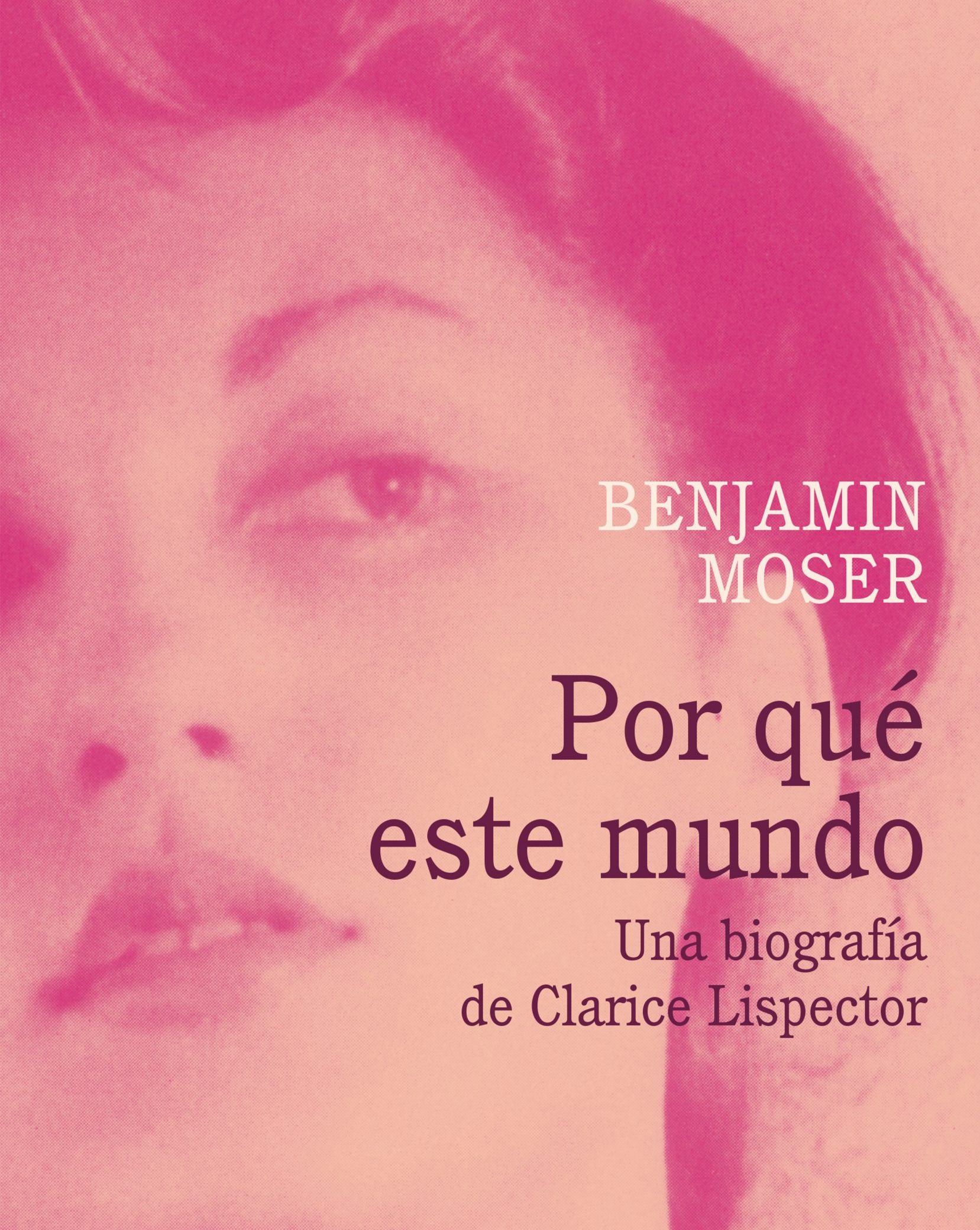
, Clarice’s biography now has a Spanish edition. IMS Clarice Lispector, 2017. Disponível em: https://site.claricelispector.ims.com.br/en/2017/12/11/biografia-de-clarice-ganha-edicao-em-espanhol/. Acesso em: 04 June 2026.
Written by Benjamin Moser, Clarice Lispector’s biography Why This World (Oxford University Press, 2009) continues to circulate around the world. Also published in Brazil by Cosac Naify in 2009, and translated by José Geraldo Couto, a new edition of the work was released this year, this time by Companhia das Letras. Titled Clarice, the reedited biography includes new photos, rare images, letters, and manuscripts discovered by Moser himself.
The book has now arrived in Spanish-speaking countries. The Madrid publisher Siruela released Por qué este mundo. Una biografía de Clarice Lispector (trans. Cristina Sánchez-Andrade) in September in Europe and began to distribute it in Latin America this month. The new releases will give Spanish-speaking readers the opportunity to get in touch with “a biography worthy of its great subject,” according to Orhan Pamuk, the Turkish Nobel Prize-winning writer. “One of the twentieth century’s most mysterious writers is finally revealed in all her vibrant colors.”
Are you interested? You can read a passage of the work by clicking here.
See also
 by Patrick Gert Bange
In a small, vast, and brilliant book called Three Steps on the Ladder of Writing, by Hélène Cixous (1993), the author is taken to three schools by writers that she loves: the School of the Dead, the School of Dreams, and the School of Roots. One of the books that transport Cixous to the School of Dreams is Clarice Lispector’s second published novel, The Chandelier.
 by Equipe IMS
In the 2025 edition of Clarice’s Hour, we will celebrate, through the voices and presentations of kids, the children's story “Laura’s Intimate Life,” published as a book by Clarice Lispector in 1974. In this film, six children retell, act, illustrate, and co-direct the story of Laura the hen, her husband Luís, and their son Hermany in Dona Luísa's henhouse.
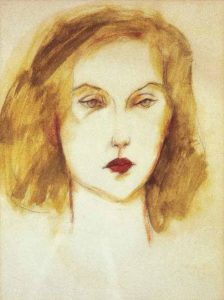 by Clarice Lispector
I spent an unforgettable weekend in Cabo Frio, hosted by Scliar who painted two portraits of me. Scliar’s house is very beautiful. Cabo Frio inspires Scliar. I asked him about so much creativity.
 by Elizama Almeida
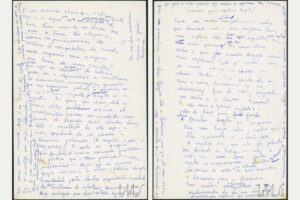
A little known concept in Portuguese, unediting is less a theory and more a practical way to support complex publishing cases, such as the publication of A Breath of Life, a posthumous novel by Clarice Lispector organized by Olga Borelli. The aim of unediting is to undo the illusion of transparency that the ready, finished, and linear book, with a minimally stabilized narrative, conveys to readers.
 by Elizama Almeida
 by Bruno Cosentino
For the journalist Laura Freitas, Clarice’s female characters hide the germ of nonconformity – “the women are wild,” she affirms.