, Clarice Lispector by Jorge Carrión. IMS Clarice Lispector, 2018. Disponível em: https://site.claricelispector.ims.com.br/en/2018/01/19/clarice-lispector/. Acesso em: 14 December 2025.
The Spanish writer and critic Jorge Carrión recently published in The New York Times an essay about the life and work of Clarice Lispector (“La pasión según Clarice Lispector”). Starting from a reading of Por qué este mundo, the biography of Clarice written by Benjamin Moser and recently released in Spanish translation by the Siruela publishing house, the author addresses broader issues related to Clarice’s work:
“She did not like interviews and fiction – in her case – is much more important, incisive, and eloquent than nonfiction. By reading her novels and short stories, one might conclude that she is a hermetic author, close to mysticism. However, I believe, on the contrary, that she is an absolutely contemporary artist, who resolved in her work one of the great literary problems of our time: how to write, with abstract ambition, mental landscapes with figurative language.”
That is, for Carrión, Clarice’s work is “corporeal, totally vital, and bloody,” although it is curdled with metaphors and mysteries. This characteristic brings her prose closer to poetry, according to the critic. That is why, perhaps, she wrote as if it were to save someone’s life, perhaps her own, as she said in A Breath of Life.Read Carrión’s essay, in Spanish, by clicking here.
See also
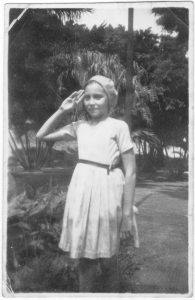 by Mell Brites
More or less fantastic in their plots, these children’s stories reveal narrators who, stripped almost completely of their fictional character, are very similar to the author: they are mothers, writers, they go by the initials “C.L.,” or even say their name is Clarice. Thus, if there is a horizontal posture in these narrators in which respect for the particularities of childhood is presupposed, this same movement also shows the desire to become a little more like a child.
 by Bruno Cosentino
This August, Todas as crônicas will be released, a volume that brings together for the first time all the chronicles written by Clarice Lispector for newspapers and magazines.
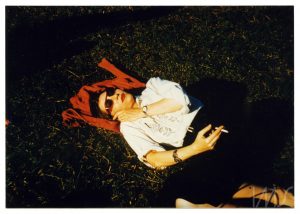 by Lilian Hack
That was the first sensation which I had when I saw Clarice’s paintings: my whole body shivered in a flush that was shared with these two women who worked every day at the archive. A kind of slip, a discomposure, a “human dismantling.” As Clarice wrote, “She needs to move her whole boneless head to look at an object.”
 by Elizama Almeida
Every year the University of Tennessee prepares AuthorFest, a series of activities to celebrate the work of a single author. In its second edition, AuthorFest paid tribute to Clarice Lispector.
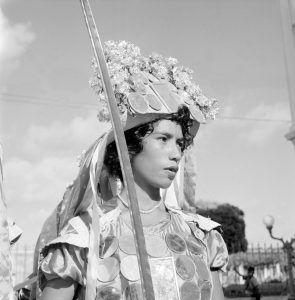 by Cicero Cunha Bezerra
Michel de Certeau, in his La fable mystique, addresses an important aspect in the relation between idiocy and holiness in the first centuries, particularly in Christian literature, namely: a mode of isolation in the crowd. Idiocy, in the form of madness, is attributed to the crowd, and additionally, is established as a provocation, a transgression in the field of the “right-minded.”
 by Bruno Cosentino
The critic José Castello will teach new classes for Grupo Clarice, a group dedicated to the reading and study of the works of Clarice Lispector. Among the works discussed are...