, “The Chandelier” is published in English. IMS Clarice Lispector, 2018. Disponível em: https://site.claricelispector.ims.com.br/en/2018/04/05/o-lustre-e-publicado-em-ingles/. Acesso em: 13 December 2025.
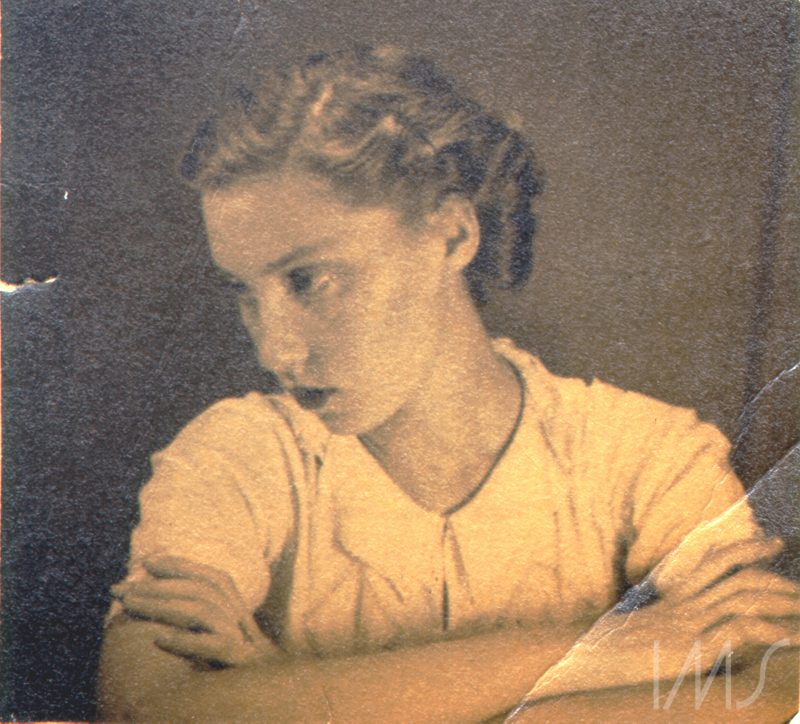
The Chandelier, Clarice Lispector’s second novel, published in 1946, was just translated into English by Benjamin Moser and Magdalena Edwards. The book is another of a series of translations of the author’s works that have been published in the past few years. In a statement to The New York Times, Moser observes that this may be the strangest and hardest book by the Brazilian writer (who was born in Ukraine in 1920). The British critic Christopher Ricks, for his part, sees it as a miniature of Clarice’s universe:
So many of the themes, philosophical inquiries and character types that appear [in The Chandelier] will return, honed as Lispector refines her style and hardens them into the diamond like perfection of her final books, which are narrated in jagged aphorisms – ‘anti literature’ she called them.
The American newspaper furthermore celebrates the rediscovery of Clarice in the United States as one of the true literary events of the 21st century, highlighting the singularity of her writing, which is marked by a unique punctuation and syntax, in addition to a capacity to resignify words according to her own wishes – “No one sounds like Lispector (…). No one thinks like her,” the journalist Parul Sehgal concludes.
A few days after the American newspaper featured The Chandelier, the editor Gregory Cowles included the book on the list of ten reading suggestions that he made for the prestigious Book Review column.
Read The New York Times article here.
*Photo: Unidentified photographer/ Clarice Lispector Collection/ IMS
See also
 by Elizama Almeida
The LPs that belonged to Clarice help us get to know a little about her musical taste.
 by Carlos Mendes de Sousa
Today is Sunday in New York. In fulgent Brasília, it is already Tuesday. Brasília simply skips Monday.
 by Elizama Almeida
Celebrated in Argentina, New York, and Paris, 2016 Clarice’s Hour was divided last year between the themes of epistolary and translation.
 by Equipe IMS
In this video lesson, Mell Brites, author of the book As Crianças de Clarice: Narrativas da Infância e Outras Revelações (The Children of Clarice: Narratives of Childhood and Other Revelations), addresses the theme of childhood in Clarice Lispector’s literature, both in her children's books and in those aimed at an adult audience.
 by Augusto Ferraz
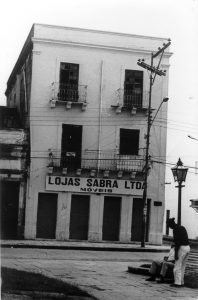
I died. I found out when, one day, on the sidewalk of Praça Maciel Pinheiro, I lifted my head, opened my eyes, and saw myself dead, there on the plaza’s sidewalk, the two-story house on the other side of the street. My broken heart inside my chest, the two-story house on Rua do Aragão, 387, where, on the second floor, Clarice Lispector lived a happy childhood here in Recife, despite the pains of the world and experiencing and feeling, mainly, the pains of an implacable disease that would one day take Mania, her mother, away from her. I found out when, laid out on the sidewalk there under the scorching Sunday sun, I turned my head to the right and saw a man beside me, who was also looking at the house.
 by Bruno Cosentino
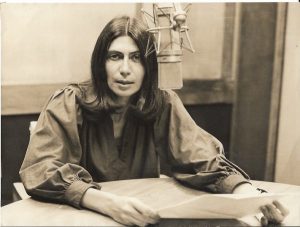
The writer Ana Maria Machado had an unusual and emotional episode with Clarice Lispector. This happened in 1975. After having read an article by Ana Maria, published that very day in the Jornal do Brasil, about the birthday of the writer Roland Barthes, Clarice, who did not know her personally, insistently asked her for help to organize what in two years would be the book The Hour of the Star.