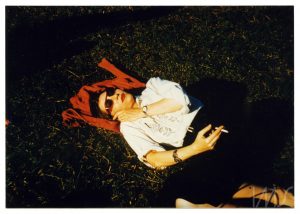
, Clarice Lispector by Jorge Carrión. IMS Clarice Lispector, 2018. Disponível em: https://site.claricelispector.ims.com.br/en/2018/01/19/clarice-lispector/. Acesso em: 06 December 2025.
The Spanish writer and critic Jorge Carrión recently published in The New York Times an essay about the life and work of Clarice Lispector (“La pasión según Clarice Lispector”). Starting from a reading of Por qué este mundo, the biography of Clarice written by Benjamin Moser and recently released in Spanish translation by the Siruela publishing house, the author addresses broader issues related to Clarice’s work:
“She did not like interviews and fiction – in her case – is much more important, incisive, and eloquent than nonfiction. By reading her novels and short stories, one might conclude that she is a hermetic author, close to mysticism. However, I believe, on the contrary, that she is an absolutely contemporary artist, who resolved in her work one of the great literary problems of our time: how to write, with abstract ambition, mental landscapes with figurative language.”
That is, for Carrión, Clarice’s work is “corporeal, totally vital, and bloody,” although it is curdled with metaphors and mysteries. This characteristic brings her prose closer to poetry, according to the critic. That is why, perhaps, she wrote as if it were to save someone’s life, perhaps her own, as she said in A Breath of Life.Read Carrión’s essay, in Spanish, by clicking here.
See also
by Rafael Juliao
“I wanted to announce the following: the person I love most in life is named Clarice Lispector.” This affirmation was made by Cazuza.
by Elizama Almeida
At the 35th edition of the Paris Book Fair, Brazil was the country of honor. The program was marked by an exhibition dedicated to Clarice Lispector at Éditions des Femmes,
by Elizama Almeida
When we had no way of knowing that the hashtag
gratitude would be one of the terms referring to two
strong traits of the future...
by Victor Heringer
Written by Benjamin Moser, Clarice Lispector’s biography Why This World (Oxford University Press, 2009) continues to circulate around the world.
by Equipe IMS
The film portrays the famous Ulisses, Clarice Lispector’s dog and a prominent character in her life and fiction. He is present in the posthumous novel A Breath of Life, he is the narrator of the children’s book Quase de verdade (Almost True), he was mentioned in countless chronicles, and today he is immortalized, alongside his owner, in a bronze statue at Leme Beach, in Rio de Janeiro.
by Maria Clara Bingemer
The numerous commentators who not only in Brazil but also throughout the world investigate Clarice Lispector’s work encounter several aspects to highlight in her multifaceted writing.1 From the fruitful tension between transcendence and contingence to the profound and refined attention to the human condition, one can encounter an immense variety of dimensions in her body of writings.